{ round sling manufacturer }

  • Why Ratchet Tie Down Straps Are Essential for Cargo Transportation

    Cargo safety is one of the most important factors in transportation and logistics. Whether transporting machinery, construction materials, containers, motorcycles, or industrial equipment, proper cargo securing solutions help prevent accidents, cargo damage, and financial losses.

    Among various cargo securing products, ratchet tie down straps have become one of the most widely used and reliable solutions worldwide. Their high strength, ease of operation, and versatility make them essential in trucking, shipping, warehousing, and industrial transportation.

    As a professional cargo control manufacturer, NANJING D.L.T SLING CO.,LTD supplies high-quality ratchet tie down straps for global customers across multiple industries.


    What Is a Ratchet Tie Down Strap?

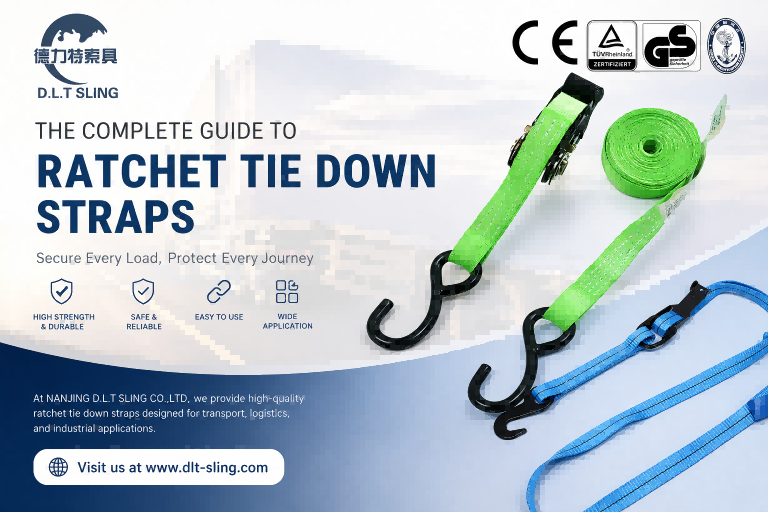
    A ratchet tie down strap is a cargo securing device made of high-strength polyester webbing combined with a metal ratchet buckle and end fittings such as hooks.

    The ratchet mechanism allows users to tighten the strap securely around cargo, preventing movement during transportation.

    Main components include:

    Ratchet straps are widely used for:

    • Truck transportation
    • Container cargo securing
    • Trailer tie downs
    • Motorcycle transport
    • Heavy equipment fastening
    • Warehouse cargo restraint


    Advantages of Ratchet Tie Down Straps

    1. Strong Cargo Securing Capacity

    High-quality ratchet straps provide excellent tension force and load restraint performance.

    Compared with ropes or ordinary belts, ratchet tie downs offer:

    • Better stability
    • Higher breaking strength
    • More secure locking
    • Reduced cargo shifting risk

    Heavy-duty ratchet straps are especially suitable for industrial transportation and oversized cargo.

    2. Easy and Efficient Operation

    The ratchet mechanism allows operators to tighten cargo quickly and efficiently without complicated tools.

    Benefits include:

    • Faster loading process
    • Reduced labor intensity
    • Improved transportation efficiency
    • Safer cargo handling

    3. Lightweight but Durable

    Polyester webbing offers:

    • High strength-to-weight ratio
    • Low elongation
    • Abrasion resistance
    • UV resistance
    • Moisture resistance

    This makes ratchet tie down straps suitable for both indoor and outdoor transportation environments.

    4. Protects Cargo Surface

    Unlike steel chains or wire ropes, polyester tie down straps are softer and less likely to scratch painted or delicate surfaces.

    This is especially important for:

    • Machinery
    • Vehicles
    • Aluminum products
    • Finished equipment
    • Sensitive industrial components


    Common Types of Ratchet Tie Down Straps

    Different transportation applications require different strap configurations.

    Popular types include:

    • Standard ratchet tie down straps
    • Endless ratchet straps
    • Cam buckle straps
    • Heavy-duty cargo straps
    • Auto tie down straps
    • Retractable ratchet straps

    Common hook options:

    • Double J hooks
    • Flat hooks
    • S hooks
    • Wire hooks
    • Chain extensions


    How to Choose the Right Ratchet Strap

    Consider the Working Load Limit (WLL)

    Always select a strap with sufficient load capacity for the cargo weight.

    Important factors include:

    • Cargo weight
    • Transportation method
    • Tie down angle
    • Number of straps used

    Check Webbing Width and Length

    Common webbing widths:

    • 25mm
    • 35mm
    • 50mm
    • 75mm
    • 100mm

    Longer straps are suitable for oversized cargo and industrial equipment.

    Choose Suitable End Fittings

    Different hook types are designed for different anchor points and transportation equipment.

    Verify Safety Standards

    Professional ratchet tie downs should comply with international cargo control standards.

    Industries Using Ratchet Tie Down Straps

    Ratchet straps are widely used in:

    • Logistics and transportation
    • Trucking industry
    • Construction industry
    • Port and shipping operations
    • Warehousing
    • Agriculture
    • Automotive transport
    • Heavy machinery transportation

    RATCHET LASHING


    Why Choose DLT Sling?

    DLT Sling Official Website is a professional manufacturer specializing in:

    • Ratchet tie down straps
    • Polyester webbing slings
    • Round slings
    • Cargo lashing products
    • Heavy lifting slings

    Our advantages include:

    • OEM customization support
    • Customized labels and packaging
    • CE and GS certified products
    • Strict quality inspection
    • Large production capacity
    • Rich export experience

    We are committed to providing reliable cargo securing solutions for customers worldwide.

  • How to Choose the Right Lifting Sling for Heavy-Duty Applications

    In industries such as construction, logistics, shipping, and heavy machinery, lifting slings play a critical role in ensuring safe and efficient operations. Choosing the right sling is not just about capacity—it directly impacts safety, durability, and overall working efficiency.

    In this guide, we will walk you through how to select the most suitable lifting sling for your application and why working with a professional manufacturer makes all the difference.


    1. Understand Different Types of Lifting Slings

    Before making a decision, it’s important to understand the main types of lifting slings available:

    Webbing Slings (Flat Slings)

    • Made from high-strength polyester
    • Lightweight and flexible
    • Ideal for delicate or smooth surface lifting

    Round Slings

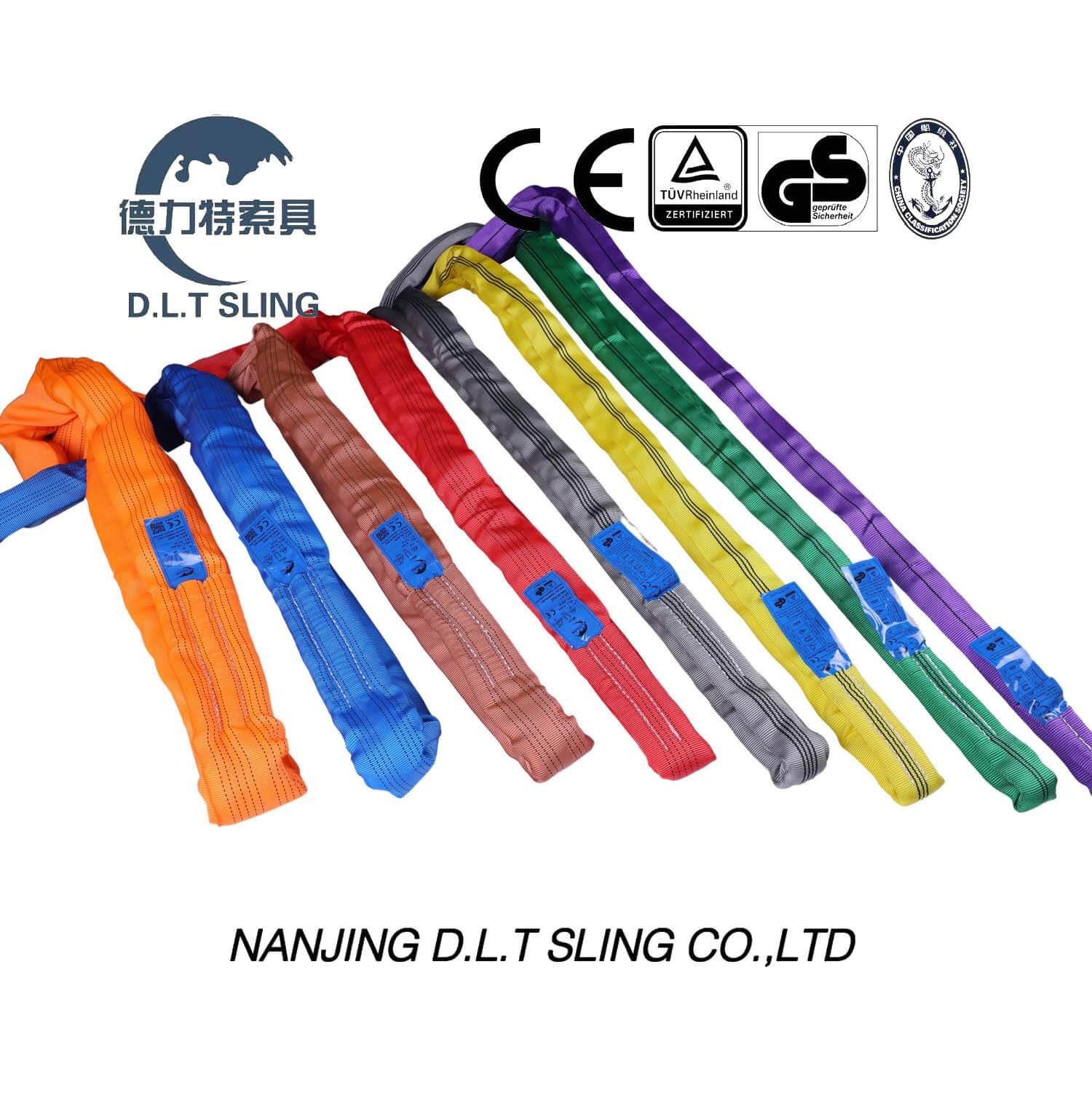
    • Endless loop design with a protective sleeve
    • Even load distribution
    • Suitable for heavy-duty lifting (up to 1100T in advanced applications)

    Ratchet Tie Down Straps

    • Mainly used for cargo securing rather than lifting
    • Easy to operate and adjust

    Each type serves a different purpose, and choosing the wrong one may lead to safety risks or reduced efficiency.

    Ratchet Tie Down Straps


    2. Consider Working Load Limit (WLL)

    The Working Load Limit (WLL) is the maximum weight a sling can safely lift under normal conditions.

    A reliable manufacturer will provide:

    • Clear WLL markings
    • Safety factor (e.g., 5:1, 6:1, or 7:1)
    • Compliance with international standards

    ⚠️ Never exceed the rated capacity, even for short lifts.


    3. Check Safety Certifications

    For international markets, certifications are essential. High-quality lifting slings should meet standards such as:

    • CE certification
    • GS certification
    • EN standards

    Certified products ensure:

    • Strict quality control
    • Reliable performance
    • Compliance with European market requirements

    4. Evaluate Material Quality

    The performance of a lifting sling depends heavily on raw materials.

    Premium slings use:

    • High-tenacity polyester yarn
    • Wear-resistant protective sleeves
    • Reinforced stitching technology

    Poor-quality materials can lead to:

    • Premature wear
    • Reduced load capacity
    • Increased safety risks

    5. Assess Working Environment

    Different environments require different sling characteristics:

    • Sharp edges: Use slings with protective sleeves
    • High temperature: Avoid polyester or use specialized materials
    • Chemical exposure: Ensure material resistance
    • Outdoor use: UV-resistant materials are preferred

    6. Customization Matters

    Every project is unique. A professional factory can provide:

    • Custom length and width
    • Special color coding
    • Private labeling (customer logo)
    • Customized packaging solutions

    This not only improves usability but also strengthens your brand in the market.


    7. Why Choose a Professional Manufacturer

    Working directly with a factory ensures:

    • Stable quality control
    • Competitive pricing
    • Fast production lead time
    • Strong technical support

    An experienced manufacturer can also help you:

    • Optimize product selection
    • Reduce procurement costs
    • Avoid common safety mistakes


    Choosing the right lifting sling is a combination of understanding your application, ensuring safety compliance, and selecting a trustworthy supplier.

    Whether you need webbing slings, round slings, or cargo lashing solutions, focusing on quality, certification, and customization will help you achieve safer and more efficient lifting operations.


    If you are looking for a reliable lifting sling manufacturer with strong production capacity and international certifications, feel free to contact us for more information or a customized quotation.

  • Flexible Round Slings Safety Factor of 71 in European and Australian Standards

    Flexible round slings are widely used in lifting and rigging operations to safely handle heavy loads. These slings are designed to provide flexibility, durability, and strength while ensuring utmost safety. In this blog post, we will delve into the European and Australian standards for flexible round slings and highlight the significant safety factor of 7:1 that is common in both regions. Understanding these standards is essential for businesses and individuals involved in lifting operations, as it helps ensure compliance and maintain a high level of safety.

    In Europe, flexible round slings are regulated by the European Standard EN 1492-2. This standard defines the requirements and safety factors for flexible round slings used in lifting operations. The safety factor of 7:1, specified in this standard, indicates that the breaking strength of the sling is seven times higher than the maximum working load. This ensures a significant margin of safety and allows for safe lifting and handling of loads.

    In Australia, the standard governing flexible round slings is AS 4497:1997. Similar to the European standard, the Australian standard also requires a safety factor of 7:1 for these slings. This means that the sling's breaking strength must be seven times greater than the maximum working load. By adhering to this standard, businesses in Australia can ensure the safe and efficient use of flexible round slings in lifting operations.

    The safety factor of 7:1 offers several benefits in lifting operations. Firstly, it provides a substantial safety margin, reducing the risk of sling failure and accidents. The high safety factor accounts for variations in load distribution, irregularities in the lifting process, and unexpected forces that may be exerted on the sling. Additionally, the safety factor allows the sling to withstand potential wear and tear, ensuring its longevity and reliability.

    To ensure compliance with safety standards, it is important to select flexible round slings that meet the specified 7:1 safety factor. Businesses should procure slings from reputable manufacturers or suppliers who can provide documentation and certifications demonstrating compliance with the relevant standards. Additionally, regular inspections, maintenance, and proper storage of slings are crucial to ensure their ongoing safety and performance.

    Proper training and education for workers involved in lifting operations are essential to ensure the safe and correct use of flexible round slings. Workers should receive comprehensive training on sling inspection, proper handling techniques, weight limits, and safe lifting practices. By promoting a culture of safety and providing workers with the necessary knowledge and skills, businesses can minimize the risk of accidents and maintain a safe working environment.

    polyester round sling