Tinplate aerosol cans are widely used for packaging pressurized products because they combine a rigid metal structure, customizable dimensions, and adaptable surface coatings. A typical three-piece tinplate aerosol can consists of a cylindrical body, a top cone, and a bottom dome. These components are manufactured separately and joined to form a pressure-resistant container designed for specific filling and dispensing requirements.
Understanding the structure, material properties, and manufacturing process of tinplate aerosol cans is essential when selecting packaging for spray paint, insecticides, air fresheners, automotive care products, and industrial applications. This guide explains how each component contributes to can performance and what buyers should evaluate when sourcing aerosol packaging.
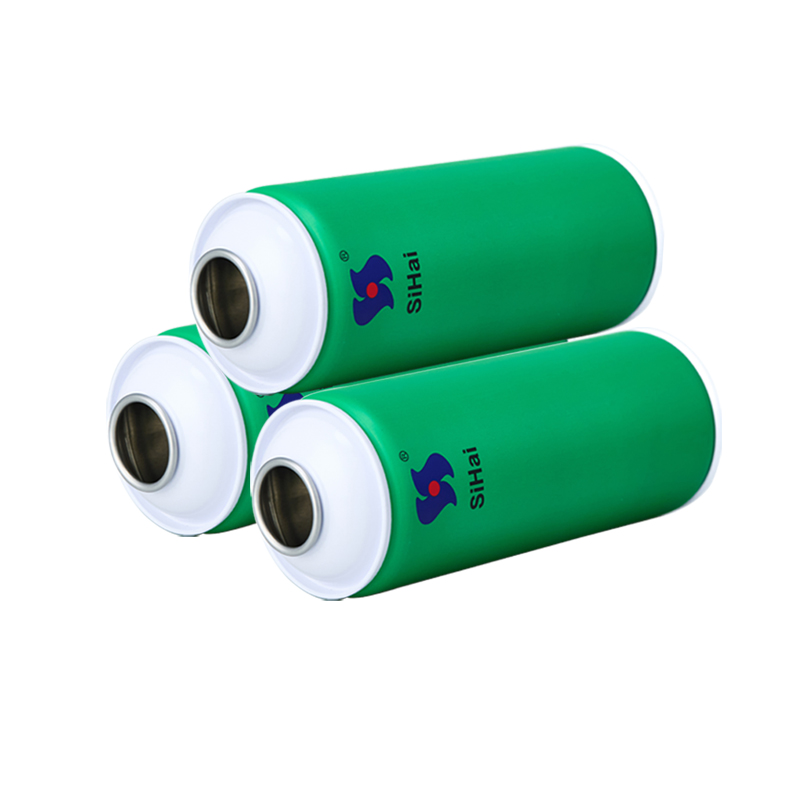
Tinplate aerosol cans with customized exterior printing
What Is a Tinplate Aerosol Can?
A tinplate aerosol can is a metal container manufactured from steel sheet coated with a thin layer of tin. The steel provides mechanical strength, while the tin coating helps protect the steel surface against corrosion. Depending on the product formulation and packaging requirements, additional internal coatings may also be applied.
Unlike a simple storage container, an aerosol can must withstand internal pressure during filling, transportation, storage, and dispensing. Its dimensions, material thickness, welded seams, and sealed connections therefore need to be considered together rather than evaluated independently.
Sihai focuses on three-piece tinplate aerosol cans, including necked-in and straight-wall designs. Its published product range covers six main diameters: 45mm, 52mm, 57mm, 60mm, 65mm, and 70mm.
For buyers comparing different container configurations, 45mm necked-in aerosol tin cans provide a product-specific example of a compact packaging format designed for snow spray applications.
Main Components of a Three-Piece Aerosol Can
A three-piece aerosol can consists of three primary metal components: the cylindrical body, the top cone, and the bottom dome. Each component has a different structural function, and their dimensions must be compatible to achieve reliable assembly and sealing.
1. Cylindrical Can Body
The can body forms the main cylindrical wall and provides the internal volume for the aerosol formulation and propellant. It is produced from cut tinplate sheets that are formed into cylindrical shapes and joined along a longitudinal seam, commonly using resistance welding in three-piece aerosol can manufacturing.
Body diameter and height influence the container's capacity, proportions, and compatibility with filling and packaging equipment. Material thickness also affects structural performance. A thinner body may reduce material consumption, but its suitability depends on the required pressure resistance and the overall can design.
2. Top Cone
The top cone is the shaped metal component installed at the upper end of the can body. It creates the transition between the cylindrical body and the valve mounting area. The cone also contributes to the overall pressure-bearing structure.
The center opening and mounting geometry must match the selected aerosol valve system. During assembly, the cone is mechanically joined to the body through a seaming operation. Accurate dimensions and consistent forming are important for achieving a reliable connection.
3. Bottom Dome
The bottom dome closes the lower end of the aerosol can. Its curved geometry is designed to distribute internal forces more effectively than a simple flat closure. The dome must maintain its intended shape under the specified operating conditions.
The bottom component is attached to the can body through a mechanical double-seaming process. The dimensions, forming quality, and sealing condition of this connection are important considerations when evaluating finished aerosol containers.
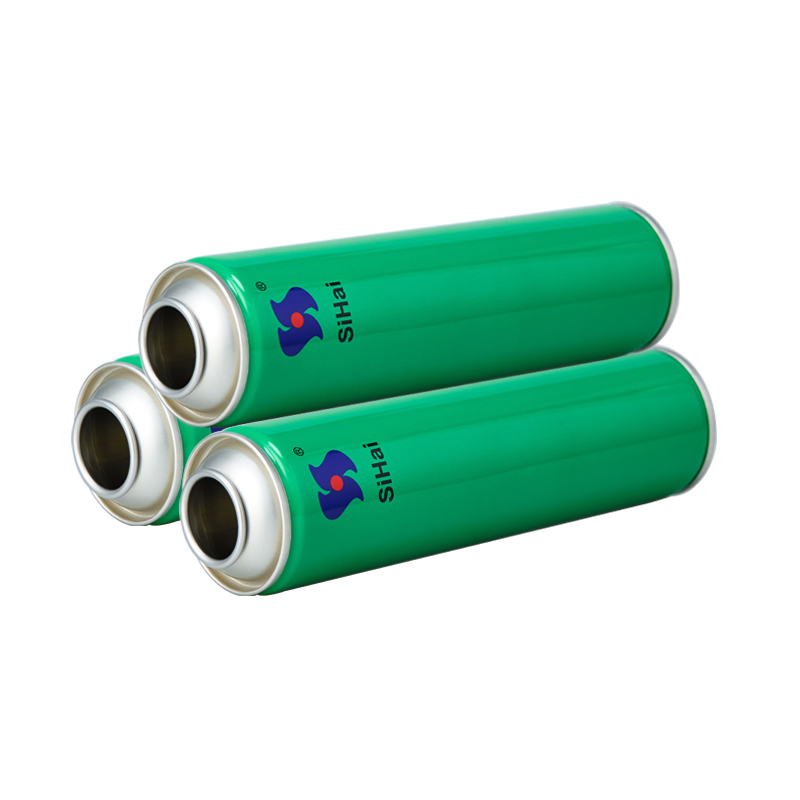
Example of a finished three-piece tinplate aerosol can
What Materials Are Used in Tinplate Aerosol Cans?
Tinplate is the primary material used in conventional three-piece steel aerosol cans. It consists of a steel substrate with a thin tin coating on its surface. Material selection should consider mechanical strength, coating condition, corrosion protection, forming requirements, and compatibility with the packaged formulation.
The steel substrate provides the structural foundation of the can. Its thickness and mechanical properties influence the forming process, weldability, and pressure-bearing performance. The tin coating helps protect the underlying steel, while additional internal lacquer may be required depending on the chemical characteristics of the contents.
Material Thickness and Structural Performance
Tinplate thickness is not necessarily identical across the body, cone, and dome. Different components experience different forming and mechanical requirements, so their thicknesses may be specified separately.
For example, Sihai's published 52mm high-pressure aerosol can specifications list a body thickness of 0.18–0.23mm and cone and dome thicknesses of 0.25–0.44mm. These are product-specific reference values rather than universal specifications for all tinplate aerosol cans.
Internal Coatings and Product Compatibility
Internal coatings play an important role in protecting the metal surface from direct contact with certain aerosol formulations. Depending on the application, plain or lacquered internal surfaces may be specified.
Sihai's published product options include plain and golden lacquered internal finishes. The appropriate coating should be selected according to the formulation's chemical composition, storage conditions, and compatibility testing results.
A coating should not be selected based on appearance alone. Compatibility testing should consider potential corrosion, coating adhesion, product contamination, and changes in formulation quality during storage.
Exterior Printing and Surface Finishes
Exterior printing determines how the aerosol container presents a product brand on retail shelves. Sihai lists CMYK and Pantone printing options, allowing customers to provide artwork and specify different color requirements.
Printed tinplate can also incorporate metallic visual effects and customized surface finishes, depending on the selected production requirements. Artwork preparation, color consistency, and registration accuracy should be checked before mass production.
Buyers looking for a high-pressure packaging option can review the 52mm high-pressure empty aerosol tinplate can, which provides published specifications for material thickness, internal coating, exterior printing, and pressure performance.
Tinplate Aerosol Can Manufacturing Process
Manufacturing a three-piece aerosol can involves several coordinated operations, from raw material preparation to final inspection and packing. The main stages include tinplate cutting, printing, cone and dome forming, body welding, component assembly, and quality inspection.
Step 1: Tinplate Cutting
The manufacturing process begins with tinplate sheets or coils being cut into blanks of the required dimensions. Cutting accuracy affects the subsequent forming process, body dimensions, and material utilization.
The blank dimensions must correspond to the intended can diameter and height. Poor cutting accuracy may cause difficulties during body forming or affect the consistency of the finished containers.
Step 2: Tinplate Printing
After material preparation, the tinplate is printed according to the approved artwork. The printing process may involve CMYK or specified Pantone colors, depending on the customer's design requirements.
Accurate color reproduction, print positioning, and surface quality are important at this stage. The printed sheets must also be handled carefully to avoid scratches, contamination, or damage before forming.
Step 3: Cone and Dome Forming
The top cone and bottom dome are produced through metal forming operations. Tinplate blanks are pressed into the required shapes using dedicated tooling.
Forming accuracy is important because both components must fit the corresponding body dimensions. The valve mounting area, curved profile, and seaming edges need to meet the intended design specifications.
Step 4: Can Body Forming and Welding
The printed body blanks are rolled into cylindrical shapes and joined along their longitudinal edges. Resistance welding is commonly used to create the body seam in three-piece tinplate aerosol can production.
Welding quality is a critical factor because an inconsistent seam can compromise the container's structural integrity. Welding parameters, electrode condition, material alignment, and seam inspection all require appropriate process control.
Step 5: Component Assembly and Seaming
Once the cylindrical body is formed, the cone and dome are attached through mechanical seaming operations. The double seam creates the connections between the body and the two end components.
Seam dimensions and formation quality must be controlled to achieve the required mechanical strength and sealing performance. Incorrect seaming conditions may result in leakage or structural defects.
Step 6: Inspection and Packaging
Finished cans undergo inspection to verify that they meet the specified dimensional, appearance, and performance requirements. Depending on the product and inspection plan, checks may include visual inspection, dimensional measurement, weld inspection, and appropriate leakage or pressure testing.
After inspection, qualified cans are packed in cartons or on pallets for storage and transportation. Appropriate packaging helps protect printed surfaces and maintain product condition during handling and shipment.
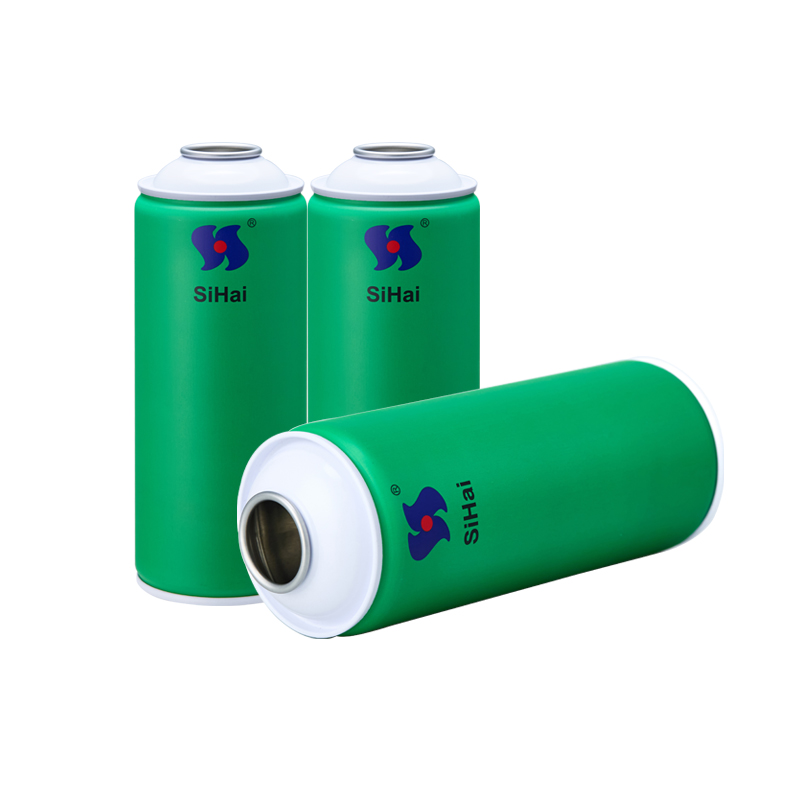
Finished aerosol tin cans after manufacturing
Necked-In vs. Straight-Wall Aerosol Cans
Necked-in and straight-wall cans are two common configurations in tinplate aerosol packaging. Their main difference is the upper body profile and the way the top section transitions toward the valve mounting area.
A necked-in can has a reduced upper body diameter, creating a shaped shoulder that transitions toward the top opening. A straight-wall can maintains a more uniform cylindrical body profile up to its upper end, with the top cone forming the closure structure.
| Comparison | Necked-In Can | Straight-Wall Can |
|---|---|---|
| Body profile | Reduced upper diameter | More uniform cylindrical profile |
| Top transition | Formed neck and shoulder | Straight body to top closure |
| Design considerations | Neck dimensions and forming accuracy | Body geometry and end connection |
| Selection factors | Valve fit, filling equipment, appearance | Filling equipment, product design, packaging needs |
Neither design is automatically better for every application. Buyers should compare the can profile with their filling equipment, valve specifications, product requirements, and transportation conditions.
For example, Sihai offers a 65mm necked-in empty aerosol tinplate can with customized printing and coating options. Buyers considering a different body configuration can also review the 65mm straight-wall aerosol tinplate can for comparison.
How to Choose the Right Tinplate Aerosol Can
Selecting an aerosol can requires more than choosing a diameter or nominal capacity. The container must match the formulation, required pressure performance, filling system, and intended market.
1. Identify the Product Formulation
Different formulations may interact differently with metal surfaces and internal coatings. Before selecting a container, buyers should provide information about the product ingredients, propellant, and expected storage conditions.
This information helps determine whether an internal lacquer is required and what compatibility testing should be performed.
2. Confirm Diameter, Height, and Capacity
Can diameter and height determine the overall container geometry and available internal volume. The selected dimensions should also be compatible with filling equipment, storage arrangements, and packaging requirements.
Buyers should provide the required diameter, body height, target filling volume, and any dimensional restrictions before requesting a quotation.
3. Define Pressure Requirements
Internal pressure is one of the most important considerations in aerosol packaging. The container must be designed and verified for the intended pressure conditions, taking into account the formulation, propellant, filling temperature, and applicable regulatory requirements.
Buyers should distinguish between deformation pressure and burst pressure. Deformation pressure describes the pressure at which permanent deformation begins under the specified test conditions, while burst pressure refers to the pressure at which the container fails.
These values should be confirmed against the actual product specification and relevant testing standards rather than assumed from the can diameter alone.
4. Check Valve and Filling Compatibility
The cone opening, valve mounting dimensions, and container configuration must match the intended aerosol valve. Buyers should confirm the valve type, mounting requirements, and filling line compatibility before production.
5. Evaluate Printing and Packaging Requirements
Artwork, color selection, internal coating, and shipping packaging should be confirmed before production begins. Providing complete artwork files and approved samples can help reduce avoidable revisions and inconsistencies.
Typical Specifications and Manufacturing Data
Published product specifications provide a useful starting point for comparing aerosol can designs. The following table summarizes representative data listed on Sihai's website. The values refer to specific product offerings and should not be interpreted as specifications for every can size or configuration.
| Parameter | Published Information |
|---|---|
| Main can diameters | 45 / 52 / 57 / 60 / 65 / 70 mm |
| Main can configurations | Necked-in and straight-wall |
| Material | Tinplate |
| Example 52mm body thickness | 0.18–0.23 mm |
| Example 52mm cone and dome thickness | 0.25–0.44 mm |
| Example 52mm deformation pressure | 1.2–1.8 MPa |
| Example 52mm burst pressure | 1.4–2.0 MPa |
| Exterior printing | CMYK / Pantone |
| Internal finish | Plain / Golden Lacquered |
Note: Pressure and thickness figures above are taken from the published 52mm high-pressure aerosol can product specifications. Confirm the latest approved technical datasheet before ordering.
Common Applications of Tinplate Aerosol Cans
Tinplate aerosol cans are used across multiple industries because their dimensions, pressure specifications, and printed finishes can be adapted to different packaging requirements.
- Automotive Care: Spray paint, carburetor cleaners, lubricants, tyre care products, and other vehicle maintenance sprays.
- Household Products: Air fresheners, insecticides, cleaning agents, and leather care sprays.
- Personal Care: Deodorants, hair sprays, shaving foams, and other personal care aerosol products.
- Industrial Applications: Anti-rust sprays, mould release agents, industrial cleaners, and other technical aerosol products.
- Seasonal Products: Snow sprays, party string sprays, and related holiday products.
Although these applications use similar basic container structures, their requirements may differ considerably. Chemical compatibility, operating pressure, dispensing performance, and packaging dimensions should always be assessed for the specific formulation.
Why Manufacturing Quality Matters
The performance of a tinplate aerosol can depends on the consistency of its materials, forming operations, welding, and final assembly. Even when the nominal dimensions are correct, defects in seams, coatings, or component geometry can affect the finished container.
Several manufacturing factors deserve particular attention:
- Material consistency: Stable tinplate properties help maintain predictable forming and mechanical performance.
- Welding quality: Consistent body seams are essential for maintaining structural integrity.
- Seaming accuracy: Correct cone and dome connections help achieve the required closure performance.
- Coating compatibility: Appropriate internal finishes help reduce the risk of formulation-related corrosion.
- Inspection procedures: Dimensional checks and suitable leakage and pressure tests help verify product conformity.
For manufacturers and packaging buyers, quality control should cover the complete production process rather than rely solely on finished-product appearance.
Frequently Asked Questions About Tinplate Aerosol Cans
1. What is a three-piece tinplate aerosol can made of?
A three-piece tinplate aerosol can consists of a cylindrical steel body, a top cone, and a bottom dome. The steel substrate is coated with tin, and additional internal lacquer may be applied depending on the product formulation and compatibility requirements.
2. What are the main differences between necked-in and straight-wall aerosol cans?
A necked-in can has a reduced upper body diameter that creates a shaped shoulder, while a straight-wall can maintains a more uniform cylindrical body profile. The appropriate design depends on valve compatibility, filling equipment, and packaging requirements.
3. What diameters are available for Sihai tinplate aerosol cans?
Sihai's published product range includes six main diameters: 45mm, 52mm, 57mm, 60mm, 65mm, and 70mm. Available heights and configurations vary according to the specific product.
4. Why do tinplate aerosol cans need internal coatings?
Internal coatings can help protect the metal surface from direct contact with certain formulations. The need for a coating depends on the chemical composition of the contents, storage conditions, and compatibility test results. Plain and golden lacquered options are listed on Sihai's product pages.
5. How are three-piece tinplate aerosol cans manufactured?
The main manufacturing stages include tinplate cutting, exterior printing, cone and dome pressing, cylindrical body forming, longitudinal seam welding, component seaming, inspection, and packaging. Each operation contributes to the dimensions, appearance, and structural performance of the finished container.
6. What information should buyers provide when ordering custom aerosol cans?
Buyers should provide the required can diameter, height, filling volume, product formulation, propellant, operating pressure, valve specifications, internal coating requirements, printing artwork, and estimated order quantity. These details help manufacturers evaluate the appropriate container structure and technical specifications.
Conclusion
Tinplate aerosol cans are engineered packaging components in which material selection, body geometry, welding, seaming, and surface coatings work together to meet specific product requirements. Understanding these factors helps buyers make more informed decisions about container dimensions, pressure performance, and formulation compatibility.
For manufacturers and distributors sourcing three-piece aerosol packaging, evaluating the complete production process is just as important as comparing individual product specifications. A suitable container should match the intended application, filling system, and applicable technical requirements.
Sihai provides tinplate aerosol can options in necked-in and straight-wall configurations, with different diameters, printing choices, and product specifications. For more information about available aerosol packaging solutions, explore the product range or contact the team to discuss your project requirements.