Custom aerosol can manufacturing is a coordinated process that transforms packaging requirements into finished metal containers ready for filling and distribution. It typically involves product specification, can structure design, material selection, dimensional confirmation, surface printing, sample evaluation, mass production, and final inspection. Each stage affects the container's compatibility, appearance, and performance.
For brands and distributors, successful OEM aerosol can production is not simply about printing a logo on a metal container. The can diameter, height, body structure, internal coating, pressure requirements, and valve compatibility must all be considered before production begins. Understanding the complete manufacturing workflow helps buyers reduce specification errors, avoid unnecessary revisions, and establish a more reliable production plan.
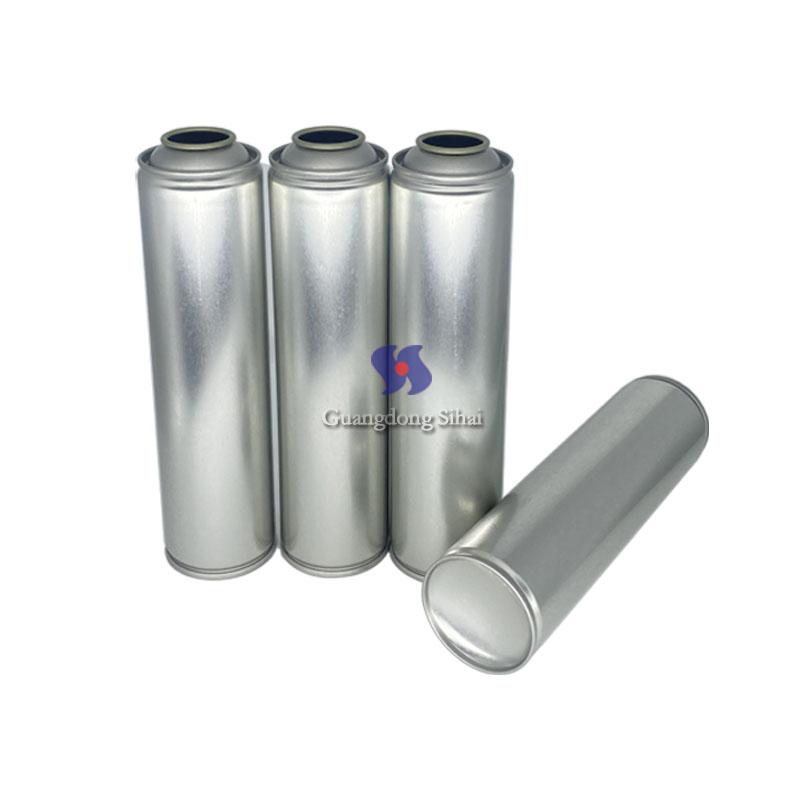
Custom tinplate aerosol cans in different configurations
What Is Custom Aerosol Can Manufacturing?
Custom aerosol can manufacturing refers to producing aerosol containers according to a customer's specific technical, dimensional, and branding requirements. Instead of selecting only from standard packaging options, buyers can define the can structure, diameter, height, printing design, internal finish, and other relevant specifications.
The process usually begins with an evaluation of the product to be packaged. For example, an air freshener, spray paint, insecticide, or automotive maintenance product may require different container dimensions, pressure performance, and internal coating compatibility.
For three-piece tinplate aerosol cans, the main manufacturing components include a cylindrical body, a top cone, and a bottom dome. These components are manufactured and assembled through coordinated forming, welding, and seaming operations.
Sihai Pack's published tinplate aerosol can range includes necked-in and straight-wall configurations, with diameters of 45mm, 52mm, 57mm, 60mm, 65mm, and 70mm. The listed height range for its custom-size product offering is 86–240mm, subject to the specific product design.
For buyers who need different dimensions or printing arrangements, the custom-size tinplate aerosol can solution provides a reference for available configurations and OEM requirements.
Step 1: Define Product Requirements Before Design
A successful custom aerosol can project starts with clearly defined product requirements. Before discussing dimensions or artwork, manufacturers need to understand what the container will hold and how it will be used.
The formulation, propellant, filling method, operating conditions, and target market can all influence the final packaging specification. Providing this information early helps avoid selecting a container that looks suitable but does not meet the product's actual requirements.
Information Buyers Should Prepare
- Product application: Identify whether the aerosol is intended for spray paint, insecticide, air freshener, automotive care, personal care, or industrial use.
- Filling volume: Define the required filling volume and available internal container capacity.
- Container dimensions: Provide the preferred diameter, height, and any dimensional restrictions.
- Pressure requirements: Specify the expected operating conditions and applicable pressure requirements.
- Formulation compatibility: Share relevant product ingredients and chemical compatibility requirements for coating selection.
- Branding requirements: Prepare the logo, artwork, color references, and mandatory product information.
Incomplete requirements often lead to repeated communication and changes during production preparation. A detailed specification sheet gives both the buyer and manufacturer a common reference for technical evaluation.
Step 2: Select the Right Can Structure and Dimensions
Can structure and dimensions determine how the container fits the filling system, valve assembly, storage arrangements, and final product presentation. Buyers should confirm these details before approving the manufacturing design.
Necked-In Aerosol Cans
A necked-in aerosol can has a reduced upper body diameter that creates a shaped shoulder near the top opening. This configuration is commonly selected when the packaging design requires a narrower upper profile.
During customization, manufacturers need to confirm the neck dimensions, shoulder geometry, cone compatibility, and valve mounting requirements. These details should be evaluated together rather than treating the body diameter as the only important measurement.
Straight-Wall Aerosol Cans
A straight-wall aerosol can maintains a more uniform cylindrical body profile. Its design may be preferred when a consistent outer body shape is required for the intended packaging appearance or product configuration.
The body height, end geometry, and valve mounting arrangement still need to match the filling equipment and product requirements. A straight-wall design should not be selected solely based on appearance.
| Design Factor | Necked-In | Straight-Wall |
|---|---|---|
| Body profile | Reduced upper diameter | Uniform cylindrical profile |
| Design focus | Neck and shoulder geometry | Body and end dimensions |
| Key compatibility | Valve and filling equipment | Valve and filling equipment |
| Selection basis | Product and packaging requirements | Product and packaging requirements |
For OEM projects, Sihai's product range covers both configurations. Buyers should provide the required dimensions and application details so the appropriate structure can be evaluated before production.
Step 3: Choose Tinplate Materials and Internal Coatings
Material selection affects the mechanical performance, forming characteristics, and corrosion protection of a custom aerosol can. Tinplate is made from a steel substrate with a thin tin coating, combining the strength of steel with the protective properties of the tin surface.
However, choosing tinplate alone is not enough. Material thickness, component design, and internal coating requirements must also be evaluated according to the intended application.
Material Thickness
The body, cone, and dome may require different thickness specifications because they have different shapes and mechanical functions. The appropriate thickness depends on the can diameter, pressure requirements, material properties, and forming design.
Using an unsuitable thickness can create problems during forming or affect the finished container's structural performance. Buyers should therefore confirm the material specification with the manufacturer instead of assuming that all components use the same thickness.
Internal Coating Selection
Internal coatings help protect the metal surface when direct contact with the packaged formulation could cause corrosion or other compatibility problems. The coating type should be selected based on the actual chemical characteristics of the product.
Sihai's published product specifications include plain and golden lacquered internal finishes. The final selection should be supported by suitable compatibility evaluation, including consideration of storage conditions and formulation stability.
A coating that works for one aerosol formulation may not be appropriate for another. This is why product composition should be discussed before the coating specification is finalized.
Step 4: Develop Custom Printing and Packaging Artwork
Custom printing turns a standard metal container into branded packaging. Before mass production, the artwork must be checked for dimensions, color requirements, text positioning, and compatibility with the printable area of the can.
Sihai's published product information includes CMYK printing and customized color designs. Its product offerings also reference Pantone color options. The exact printing method and available finishes should be confirmed for the selected product.
What Should Be Checked in the Artwork?
- Artwork dimensions: Ensure the design matches the actual printable area and can dimensions.
- Color accuracy: Confirm CMYK values or Pantone references before printing.
- Text and logos: Check spelling, logo proportions, and text readability.
- Barcode placement: Verify that the barcode is correctly positioned and remains readable.
- Regulatory information: Confirm that required product warnings, labels, and market-specific information are included.
- Print orientation: Check the relationship between artwork positioning, the body seam, and the final can appearance.
Artwork approval is an important control point. Once printing begins, correcting a major design error may require additional production work and material costs. Buyers should approve the final artwork version before releasing it for production.
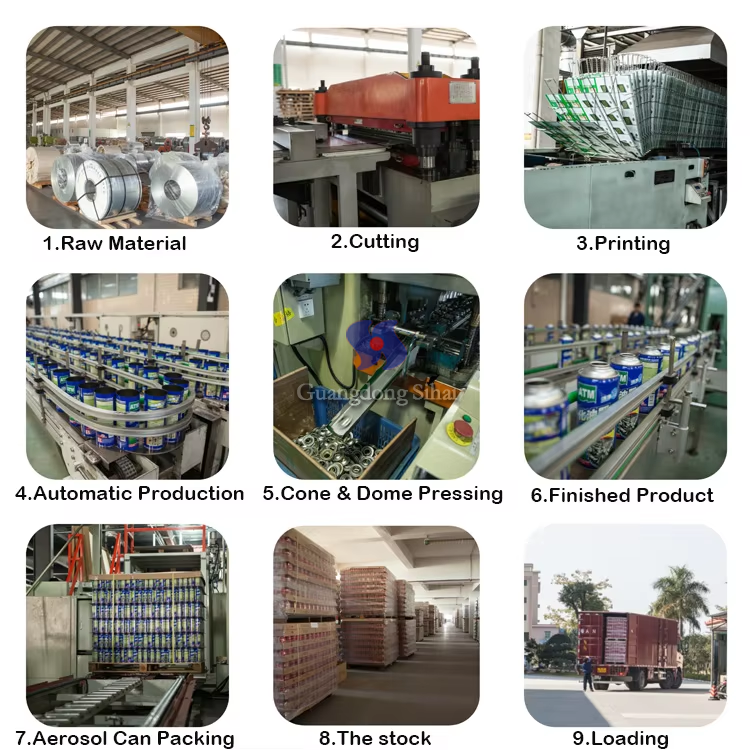
Aerosol can production stages, from raw material preparation to shipment
Step 5: Confirm Samples Before Mass Production
Sample evaluation helps verify whether the proposed can design meets the agreed requirements before a larger production order is released. It provides an opportunity to identify dimensional, appearance, and compatibility issues at an earlier stage.
For custom aerosol can projects, sample approval should cover more than the printed appearance. Buyers should review the actual container structure, dimensions, component connections, surface finish, and relevant technical specifications.
Key Items to Check During Sample Approval
- Dimensions: Measure the diameter, height, and other agreed structural dimensions.
- Appearance: Check print positioning, color consistency, scratches, dents, and surface defects.
- Structure: Review the neck, cone, dome, and body connections.
- Coating: Confirm that the internal finish matches the approved specification.
- Compatibility: Verify the container design against the intended valve and filling equipment.
- Testing requirements: Confirm that the agreed inspection and performance tests have been completed.
For a clearer production reference, buyers should retain an approved sample and a signed technical specification. This helps both parties compare subsequent production batches against the same requirements.
It is also important to distinguish between an empty-can sample and a filled aerosol product sample. An empty container can demonstrate dimensions and appearance, but it does not independently establish the performance of the complete filled aerosol system.
Step 6: Move from Sample Approval to Mass Production
Mass production should begin only after the main technical specifications, artwork, and sample requirements have been confirmed. This reduces the risk of producing a large quantity of containers that require modification or cannot be used on the customer's filling line.
For tinplate aerosol cans, the production workflow generally includes several coordinated operations:
Raw Material Cutting
Tinplate coils or sheets are cut into blanks according to the specified can dimensions. Cutting accuracy is important because the blank size affects subsequent forming, printing alignment, and material utilization.
Tinplate Printing and Coating
The prepared tinplate is printed according to the approved artwork. Surface coatings are applied as specified to protect the printed finish and provide the required surface properties. Color and print registration should be checked during production.
Cone and Dome Pressing
Separate tinplate blanks are pressed into the required cone and dome shapes. Their dimensions and forming accuracy must match the can body and intended assembly design.
Customers requiring separate components can also review Sihai's custom aerosol can cone and dome components for information about its component offerings.
Body Forming and Welding
The printed body blanks are rolled into cylindrical shapes and joined along their longitudinal seams. Sihai's product information identifies SOUDRONIC welding equipment as part of its aerosol can manufacturing process.
Welding consistency is important because the body seam is a critical structural area. Material alignment, welding conditions, and seam inspection all contribute to the quality of the finished body.
Component Assembly
The formed body is assembled with the top cone and bottom dome through mechanical seaming. Correct component alignment and seam formation help achieve the required structural integrity and sealing performance.
Final Inspection and Packing
Finished containers are inspected according to the agreed quality requirements. Sihai's published manufacturing information identifies air inspection and infrared automatic inspection equipment as part of its production process.
After inspection, qualified cans are packed using cartons or pallets, depending on the product and shipping arrangement. Packaging should protect the printed surfaces and reduce damage during transportation and handling.
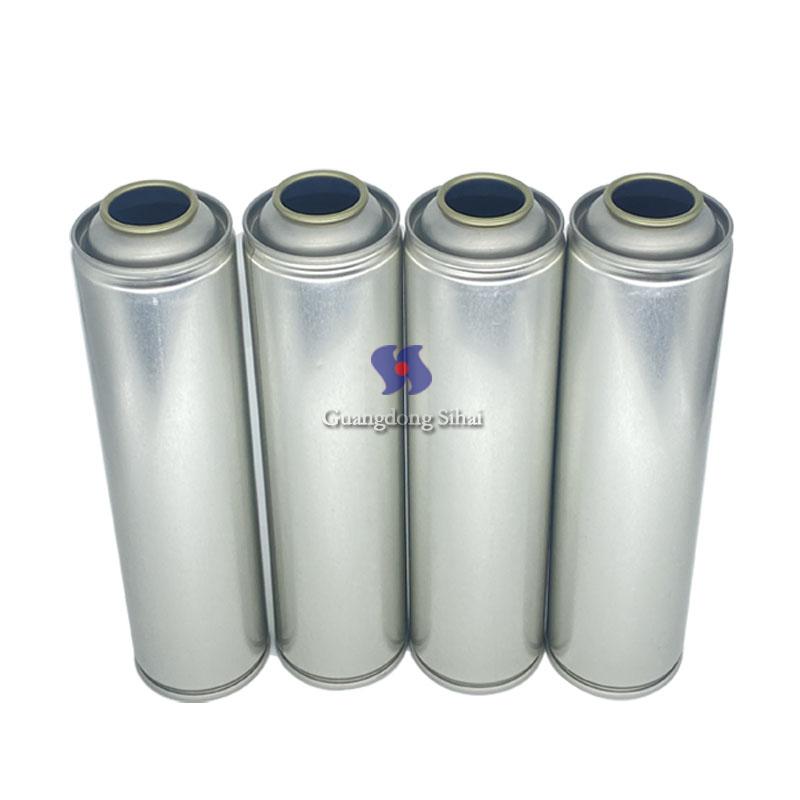
Finished aerosol cans ready for further processing or filling
Quality Control in Custom Aerosol Can Production
Quality control should cover the complete manufacturing process rather than focus only on the appearance of the finished can. Material condition, printing accuracy, welding quality, component dimensions, and sealing performance all contribute to the final product.
For custom aerosol can orders, the inspection plan should be agreed upon before mass production. This ensures that the manufacturer and buyer understand which specifications must be checked and what acceptance criteria apply.
| Inspection Stage | Main Items to Check |
|---|---|
| Raw material | Material specifications, thickness, and surface condition |
| Printing | Color, registration, artwork, and surface defects |
| Forming | Body dimensions, cone and dome geometry |
| Welding | Seam consistency and weld integrity |
| Final inspection | Appearance, dimensions, leakage, and agreed pressure tests |
| Packing | Quantity, carton or pallet condition, and shipping protection |
Pressure and leakage testing should follow the applicable product specifications and relevant regulatory requirements. The exact test conditions should be established for the intended container and application rather than applied as a universal value.
Another important point is that empty aerosol can inspection and filled aerosol product testing are not the same. The complete filled package must also be evaluated using an appropriate filling and testing process.
How to Prepare for a Custom Aerosol Can Order
A clear project specification helps manufacturers evaluate feasibility, recommend suitable configurations, and prepare a more accurate quotation. Before contacting a supplier, buyers can organize the following information.
| Information | Details to Provide |
|---|---|
| Product type | Spray paint, air freshener, insecticide, or other applications |
| Can structure | Necked-in or straight-wall |
| Dimensions | Diameter, height, and required capacity |
| Material | Tinplate and required thickness |
| Coating | Internal coating and exterior finish |
| Printing | Artwork, logo, CMYK or Pantone references |
| Technical requirements | Pressure, valve, and filling compatibility |
| Order quantity | Sample requirements and estimated bulk quantity |
| Delivery | Destination, packaging, and expected schedule |
Not every project needs a completely new mold or structure. In some cases, an existing can configuration may already meet the customer's requirements, with customization focused on printing, coating, or selected dimensions. Evaluating existing options first can help avoid unnecessary design changes.
Common Mistakes to Avoid in OEM Aerosol Can Manufacturing
Many production problems originate before manufacturing begins. Incomplete specifications, unclear artwork approval, and insufficient compatibility checks can lead to delays or costly modifications.
Choosing Dimensions Without Checking Filling Equipment
A container may meet the required appearance and volume but still be incompatible with the customer's filling line. Diameter, height, valve opening, and overall container geometry should be confirmed with the filling equipment supplier before production.
Ignoring Chemical Compatibility
Different aerosol formulations can interact differently with metal surfaces and coatings. Selecting an internal finish based only on appearance or price may increase the risk of corrosion or product-quality problems during storage.
Approving Artwork Without Checking the Actual Can Layout
A design that looks correct on a computer screen may not fit the actual printable area. Buyers should check the dimensions, orientation, seam position, and text placement before approving the final printing file.
Starting Bulk Production Before Final Confirmation
Starting mass production before specifications and samples are approved can increase the cost of corrections. A documented approval process helps prevent misunderstandings about the final product.
Frequently Asked Questions About Custom Aerosol Can Manufacturing
1. What information is needed to customize an aerosol can?
Buyers should provide the product application, can diameter, height, filling volume, material requirements, internal coating, pressure specifications, valve compatibility, printing artwork, and estimated order quantity. These details help the manufacturer evaluate the appropriate can design.
2. What sizes of custom tinplate aerosol cans does Sihai offer?
Sihai's published tinplate aerosol can range includes diameters of 45mm, 52mm, 57mm, 60mm, 65mm, and 70mm. Its custom-size product page lists a height range of 86–240mm. Actual availability should be confirmed according to the selected structure and specifications.
3. Can aerosol cans be customized with a company logo and artwork?
Yes. Sihai's published product information includes OEM printing based on customer designs, with CMYK and customized color options. Artwork dimensions, color references, and printing requirements should be confirmed before production.
4. Why is sample approval important before mass production?
Sample approval allows buyers to check the dimensions, appearance, printing, coating, and structural details before releasing a bulk order. It also establishes a reference for comparing the finished production batch with the approved requirements.
5. What quality checks are important for custom aerosol cans?
Important checks include raw material inspection, dimensional measurement, printing quality, welding inspection, component seaming, leakage testing, and pressure testing where required. The inspection plan should be based on the agreed product specifications and applicable standards.
6. How long does custom aerosol can mass production take?
The production schedule depends on the can structure, material availability, artwork approval, tooling requirements, order quantity, and inspection arrangements. Buyers should request a project-specific schedule from the manufacturer rather than rely on a general production estimate.
Conclusion
Custom aerosol can manufacturing involves much more than producing a metal container in a specific size. It requires coordination between product requirements, structural design, material selection, coating compatibility, artwork preparation, sample approval, and manufacturing quality control.
For buyers planning OEM aerosol packaging projects, confirming technical details before mass production is one of the most effective ways to reduce avoidable errors and maintain consistency. A well-defined specification and sample approval process also make communication between the buyer and manufacturer more efficient.
Sihai Pack provides tinplate aerosol packaging options, including necked-in and straight-wall cans, as well as aerosol can cones, domes, and customized printing services. Whether you are developing a new aerosol product or sourcing containers for an existing filling line, discussing your dimensions, application, and technical requirements with the manufacturer is a practical starting point.