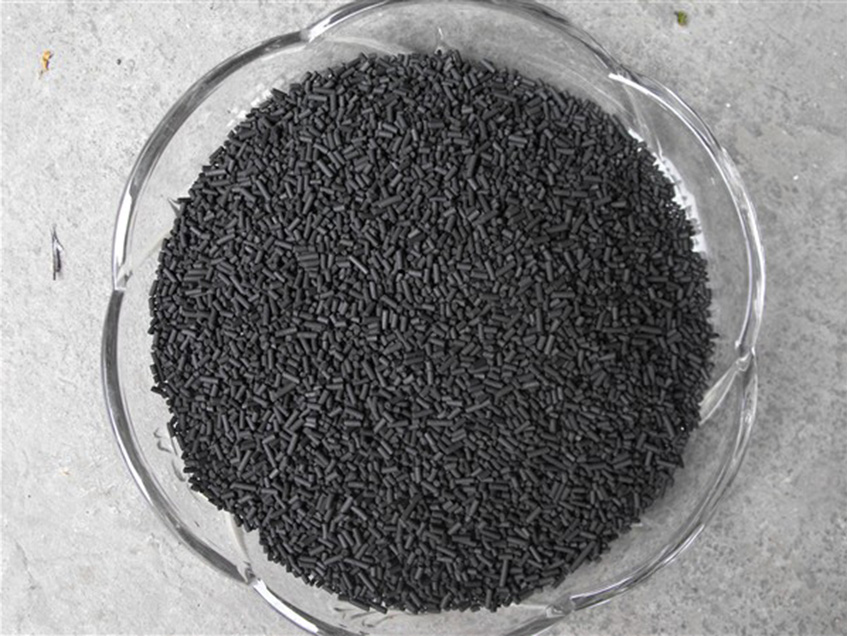
{ carbon molecular sieve }

  • Carbon Molecular Sieve Loading Steps
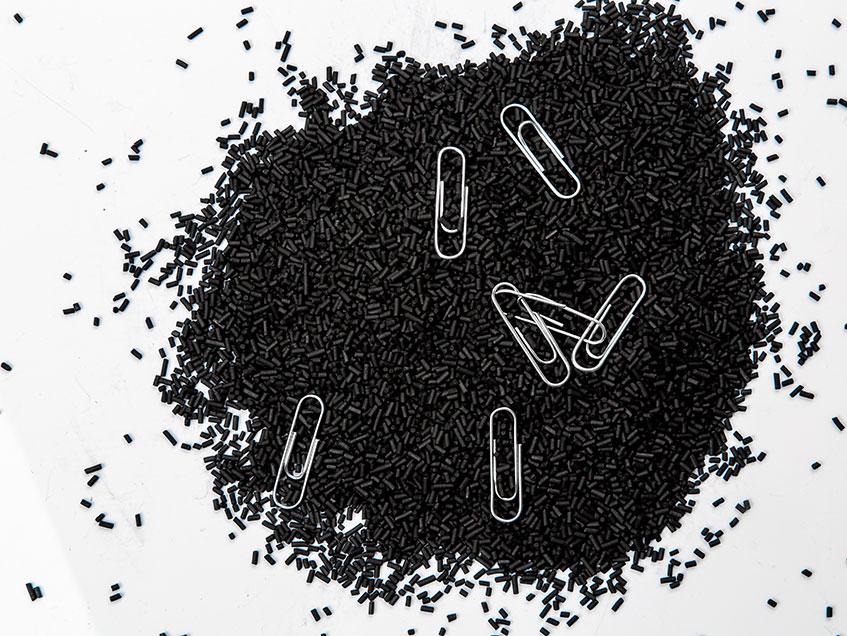
    black carbon molecular sieve


    1.System Shutdown, Pressure Relief and Power Off Operation

    First, shut down the system via the nitrogen generator control system, close the compressor outlet and nitrogen generator inlet globe valves, and slowly open the pressure relief valve to relieve pressure until all pressure gauges return to zero. Finally, cut off the main power supply of the system, hang a "Equipment Maintenance, No Switching On" sign and arrange for special personnel to be on duty to avoid the risk of working under pressure or with electricity. This procedure applies to the high purity nitrogen CMS.


    2. Separation of Nitrogen Outlet Pipeline and Removal of Adsorption Tower Top Cover

    Confirm the connection method between the nitrogen outlet pipeline and the adsorption tower, select corresponding tools to symmetrically remove the connecting components. After separation, seal the pipeline port with a sealing plug to prevent debris from entering. Two personnel shall cooperate to remove the top cover of the adsorption tower, place it stably and record the installation position to avoid collision damage.


    3. Thorough Cleaning of Spent Carbon Molecular Sieve in the Packed Tower

    Use tools such as buckets, vacuum cleaners to clean the spent carbon molecular sieve in the tower and collect it into a special waste barrel; purge residual debris in corners with low-pressure compressed air and cooperate with a vacuum cleaner to ensure no residue. Operators shall wear protective equipment, keep the area well-ventilated, and dispose of the spent molecular sieve in accordance with specifications.


    4. Integrity Inspection of Wire Mesh and Palm Mat in the Tower

    Check whether the filter wire mesh in the tower is damaged or loose, and whether the mesh size matches; check whether the sealing palm mat is aged or damaged. If there are problems, replace with components of the same specification in a timely manner, and check the integrity of the fixing components to ensure loading tightness and prevent molecular sieve leakage.


    5. Confirmation of Residues in the Tower and Preparation Before Loading

    Reconfirm that there is no residue, debris and the tower is dry; if there is water stain, purge and dry it. Prepare new carbon molecular sieve, activated alumina and other materials as well as loading tools in advance to ensure the materials are dry and intact, the tools are in normal condition, and the operators are properly protected.


    6. Bottom Paving and Preparation for Layered Loading

    Lay and fix a new palm mat at the bottom of the tower to ensure tight fit without gaps; evenly pave a 10-20cm thick layer of activated alumina on top. After checking that the paving is flat and not loose, install a loading hopper (with the outlet extending to the middle of the tower) to prepare for loading carbon molecular sieve.


    7. Carbon Molecular Sieve Loading, Vibration Compaction and Top Cover Installation

    Slowly and evenly pour new carbon molecular sieve through the loading hopper, control the feeding speed to avoid particle breakage. When loading is nearly at the top of the tower, use vibration equipment to vibrate in all directions for 5-10 minutes for compaction; if there is settlement, replenish materials in a timely manner. Finally, load until it exceeds the tower edge by 5-10cm, lay the top palm mat, then stably cover the top cover and symmetrically tighten the fixing bolts to ensure good sealing.


    For more information on carbon molecular sieves, please visit www.carbon-cms.com.
  • How to Balance Purity and Yield with Carbon Molecular Sieve?

    1.Is Higher Purity or Higher Yield Always Better?

    Not necessarily. Higher purity typically comes with lower yield, higher air consumption, and increased energy costs. If your process only requires 99.9% nitrogen, using a sieve that delivers 99.999% is simply overkill—and unnecessarily expensive.

    The same applies to yield. Pushing for maximum yield can compromise purity stability and lead to oxygen breakthrough, making the nitrogen unsuitable for your application. The smart approach: first determine the minimum purity your process requires, then choose a CMS that offers the best possible yield at that purity level. Avoid chasing extreme specifications. 


    2.Why Does Higher Purity Reduce Nitrogen Yield?

    Carbon molecular sieve purifies nitrogen by adsorbing oxygen. When extremely high nitrogen purity is required (e.g., increasing from 99.9% to 99.999%), the sieve must adsorb nearly all oxygen from the feed air.

    Here’s the trade-off: The purer the nitrogen you need, the more nitrogen you have to sacrifice to carry away the adsorbed oxygen. This increases the adsorption load on the sieve while reducing effective output.


    3. Purity vs. Yield Selection Guide (Example: SLCMS-UEP)


    Pressure

    Purity

    N₂ Yield (m³/h·t)

    Air/N₂ Ratio

    Typical Applications

    Note

    0.7 MPa

    99.5%

    325

    2.6

    Coal mine fire prevention, tank inerting, grain storage

    High volume, lower purity

    99.9%

    230

    3.2

    Laser cutting, food packaging, tire curing

    Best cost-performance balance

    99.99%

    160

    3.9

    Electronics reflow soldering, chemical blanketing

    High purity, moderate yield

    99.999%

    100

    5.4

    Lithium battery manufacturing, pharmaceutical isolation

    Purity first


    Key Takeaway:

    Always start with your actual purity requirement. Then select a CMS that maximizes yield at that purity level. This ensures reliable process performance without unnecessary operating costs.


    If you want to get more information about us,you can click www.carbon-cms.com.

  • How to Choose Carbon Molecular Sieve by Pore Size 0.3nm / 0.4nm / 0.5nm?

    When selecting carbon molecular sieves (CMS), pore size is the core factor determining nitrogen purity and application suitability.


    1.What Pore Size Actually Does: "Sieving" Gas Molecules by Size

    Carbon molecular sieves work by selectively adsorbing impurities. Under pressure, smaller molecules like oxygen (kinetic diameter: 0.346nm) diffuse faster into the micropores and are adsorbed, while nitrogen (0.364nm) diffuses more slowly and remains in the gas phase, ultimately collected as product gas. An unsuitable pore size will either fail to reach the required purity or reduce the gas production rate.


    2.Applications of 3 Common Pore Sizes


    Pore Size

    Core Function

    Suitable Nitrogen Purity

    Common Scenarios

    0.3nm

    Separates very small molecules like hydrogen and helium

    -

    Separate tiny molecules such as hydrogen and helium

    0.4nm

    Efficiently adsorbs oxygen and CO₂

    99.5%-99.9%

    Laser cutting, metal heat treatment, general industrial nitrogen generation

    0.5nm

    Low-purity nitrogen generation

    95%-98%

    High-flow, lower-purity applications where production rate is prioritized over purity


    3. Two Common Selection Mistakes to Avoid

    (1)Larger pore size is not always better: 0.5nm sieves also adsorb nitrogen, which reduces production rate and increases overall costs.

    (2)Do not arbitrarily change pore size in standard nitrogen generators: Different pore sizes require matching pressure and cycle parameters; random changes will cause system performance imbalance.


  • Powdering of carbon molecular sieve

    Powdering  of Carbon Molecular Sieve (CMS) refers to the phenomenon where its particles crack and spall to form fine powder during use, transportation or storage. It is a critical issue that impairs the service life, adsorption performance and equipment operation stability of CMS, commonly occurring in the Pressure Swing Adsorption (PSA) process for nitrogen/oxygen generation.

    Carbon Molecular Sieve

    I. Main Causes of Powdering

    1. Mechanical Stress

    • Impacts during Loading, Transportation and Storage: High-altitude dropping during loading and severe jolting in transportation cause collision and extrusion between CMS particles, resulting in surface damage or internal cracks. These cracks expand to form fine powder in subsequent use.
    • Bed Pressure Difference Fluctuation: Rapid pressure switching during adsorption and desorption in the PSA process leads to repeated expansion and contraction of the CMS bed, intensifying friction between particles and causing atrophy after long-term cycles. Excessively high gas flow velocity will also generate cavitation effects, scouring the particle surfaces.
    • Equipment Vibration: Sustained vibration of the adsorption tower itself and auxiliary equipment is transmitted to the CMS bed, accelerating particle wear.


    2. Improper Operating Conditions

    • Abrupt Temperature Change: CMS has limited thermal stability. Excessively high heating temperature (above 200℃) during regeneration, or abrupt temperature rise and drop inside the adsorption tower, will cause uneven thermal stress inside CMS and trigger lattice fracture.
    • Influence of Moisture and Impurities: Excessive moisture in the feed gas causes CMS to absorb moisture, leading to the expansion of pore structure and damage to particle integrity. Moisture can also react with impurities to form corrosive substances that erode the CMS surface. In addition, oil contamination, dust and other impurities in the feed gas will block the CMS pores, causing local overheating or pressure concentration and indirectly exacerbating atrophy.
    • Adsorbent Saturated Overload: Failure to desorb CMS in a timely manner after it reaches adsorption saturation will cause the accumulation of adsorbate molecules in the pores to generate internal pressure, which cracks the particles.


    3. Inherent Quality Defects of the Product

    • Inadequate Forming Process: Insufficient addition of binders, improper control of calcination temperature or time during production will result in low mechanical strength of CMS particles with poor compression and wear resistance.
    • Uneven Particle Size and Pore Distribution: Excessively large differences in particle size, or defective pore structures (such as concentrated micropores and wide pore size distribution), will reduce the structural stability of particles and make them prone to cracking under stress.


    II. Preventive and Resolving Measures for Atrophy

    1. Optimize Storage, Transportation and Loading Processes

    • Adopt shockproof packaging for transportation to avoid severe jolting; adopt fluidized loading or layered slow loading during filling, strictly prohibit high-altitude dropping, and perform compaction after loading to reduce bed porosity.
    • Lay stainless steel wire mesh and quartz sand cushion at the bottom of the adsorption tower before loading, and install a pressure net or elastic gland on the top to limit the expansion and contraction displacement of the bed.


    2. Strictly Control Operating Conditions

    • Stabilize the pressure switching rate of the PSA system to avoid abrupt pressure difference; control the feed gas flow velocity within the designed range to prevent cavitation scouring.
    • Control the regeneration temperature between 150℃ and 180℃ to avoid overheating; the feed gas must undergo pretreatment (cooling, dehydration, deoiling, dedusting) to ensure that the dew point of the gas entering the adsorption tower is below −40℃ and the oil content is less than 0.01 mg/m³.


    3. Select High-Quality Carbon Molecular Sieve

    • Prioritize products with high compressive strength (radial compressive strength ≥100 N per particle) and good wear resistance, and require suppliers to provide forming process and strength test reports.
    • Select an appropriate particle size (e.g., 3~5 mm columnar molecular sieve) according to operating conditions to reduce stress concentration caused by uneven particle size.


    4. Regular Maintenance and Monitoring

    • Regularly check the pressure difference of the adsorption tower, product gas purity and filter pressure difference. A rapid rise in filter pressure difference indicates intensified CMS atrophy, and the causes must be investigated in a timely manner.
    • Regularly perform screening and cleaning on the CMS bed to remove accumulated fine powder; replace part or all of the CMS in a timely manner if atrophy is severe.


    III. Treatment Plan after Powdering 

    In case of obvious powdering , take the following steps for treatment:

    1.Shut down the equipment for venting, open the manhole of the adsorption tower, and clean up fine powder and damaged particles in the bed.

    2.Check whether the pretreatment system (dryer, filter) is invalid, and repair or replace the invalid components.

    3.Supplement new CMS and reload and compact it to ensure a uniform bed.

    4.Adjust operating parameters (such as pressure switching time and regeneration temperature) to avoid inducing atrophy again.


    For more information, please visit www.carbon-cms.com.

  • Storage of Carbon Molecular Sieve

    carbon molecular sieve


    The core structure of carbon molecular sieve (CMS) consists of densely packed micropore channels, which are critical for its oxygen adsorption and nitrogen separation capabilities. Due to this unique structure, CMS is inherently “delicate” and vulnerable to two major threats—moisture and oil contamination—making protection against them the top priority in storage.


    First, moisture.Carbon molecular sieve is highly hygroscopic. Even short‑term exposure to air will cause it to rapidly absorb water vapor, filling its micropores with water molecules much like a water‑saturated sponge can no longer absorb other substances. Such damage is mostly irreversible, directly reducing the adsorption capacity of CMS by 30% to 50%, and in severe cases, rendering it completely unusable.This risk is especially high during the rainy season in southern China or in high‑humidity coastal regions, where relative humidity often exceeds 80%. Without proper moisture protection, even unopened CMS can gradually lose performance during storage.


    Second, oil contamination, which is even more damaging than moisture.Once the micropores of CMS come into contact with oil or grease, they become blocked. Oil also forms a thin film over the particles, completely eliminating adsorption activity. This type of “poisoning” cannot be reversed by regeneration; the CMS must be fully replaced.Oil contamination can originate from leaked lubricants in storage areas, oil from operators’ hands, or even residual grease on packaging containers. Even trace amounts of oil can cause catastrophic damage to carbon molecular sieve.


    In addition, temperature control during storage is equally important.The ideal storage temperature is 5–40 °C.Temperatures above 40 °C accelerate structural aging and reduce adsorption performance.Temperatures below 2 °C may cause adsorbed moisture to freeze and expand, damaging the micropore structure and even breaking the particles.


    In short, the key to preserving CMS is simple:maintain a dry, clean, and constant‑temperature environment, and isolate it from moisture and oil.This will maximize its original adsorption performance.


    If you want to get more information about us,you can click www.carbon-cms.com.