{ Aerosol Can }

  • How to Clear a Blocked Aerosol Can and Use Sufficiently

    |
        As we talk about the aerosol can product,  it's brilliant when they work well, but what about when they don't? We have a massive range of aerosols, from spray paints to chemical sprays. It covers our lives and industries.

        So, if you're unsure how to fully use your aerosol cans, keep scrolling for our tips and tricks on how to use an aerosol spray can. Eliminating this risk is about how you safely and sufficiently use your aerosol can throughout the life of the can.

        Before Use:

        Most people do undervalue the need to vigorously shake before use sometimes. Particularly in case the product is thicker or has been in a colder temperature. Ignoring shaking your cans will cause the contents to separate and result in a blocked aerosol can. That could cause the straw to get clogged or the propellant to run out before the rest of your material. This makes it a lot easier to use, whether you're applying spray paint or air freshener spray.

        Also, we recommend you use a sharp object to clear the nozzle, preventing blockage or the product drying and reducing the efficiency of the aerosol can. It's always worth keeping spare nozzles around just in case you do experience a blockage in the valve and actuator area.

        After Use:
        Even more underrated is holding your can upside down and spraying until there is no more content spraying out. This clears the nozzle and the straw, preventing content from settling in small, hard-to-reach areas.
        If your aerosol can has unfortunately blocked already and won't spray, here are a few top tips we have tried and tested:
    ----Hold the can upside down and spray; this should release some of the pressure

    ----Take off the nozzle - there may be a build-up of matter here, so remove this with a sharp object like a pin, or it is sometimes worth washing nozzles in water to get rid of the most obvious build-up

    ----Continue to shake in between clearing nozzles and straws, this helps with mixing.
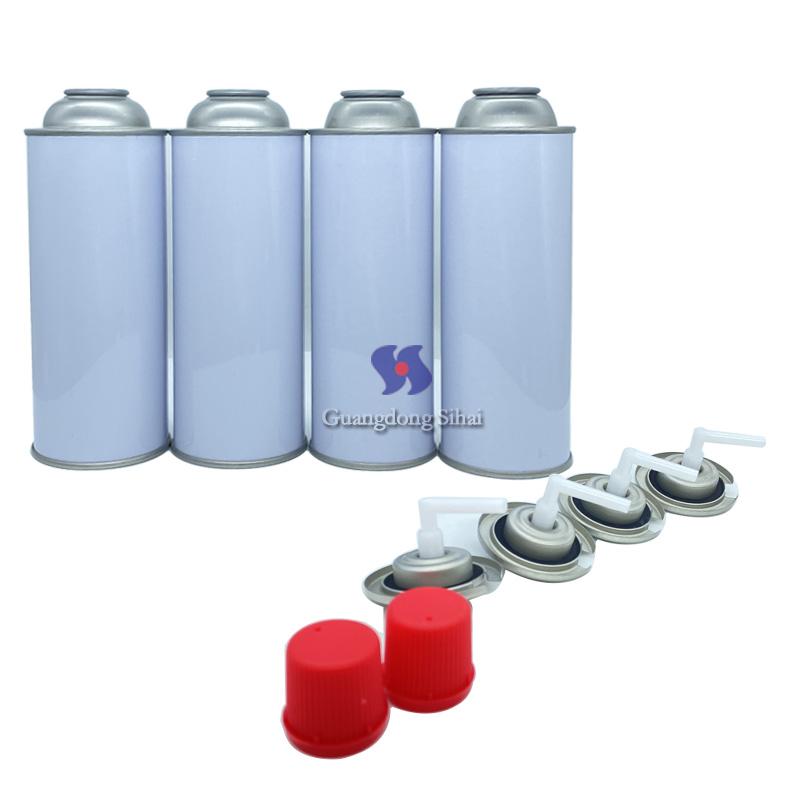


  • Principle of The Most Popular Snow Spray Can

    |

    Snow spray is a device that uses centrifugal force to atomize liquid to generate small water mist. It is widely used in artificial snow making, waters cape atomization and other fields.

    1、 Principle

    Flying snow spray is a device that uses centrifugal force to atomize liquid to form fine water mist. Its core part is the disperser, which provides airflow through an air compressor to rotate at high speed. When liquid is injected into the disperser from the pipeline, due to the centrifugal force generated by high-speed rotation, the liquid is separated into small droplets and mixed with the airflow, ultimately forming a large area of water mist.

    2、 Application

    Flying snow spray is widely used in artificial snow making, waters cape atomization and other fields, such as artificial snow making in major ski resorts, waters cape atomization in garden landscapes, and fog effect in commercial performance stages. In the process of artificial snow making, snow spray is used to make snow, that is, artificial snow particles formed by the condensation of atomized water at low temperature are used to achieve the effect of snow making; In the atomization of water features, water mist can create a beautiful landscape effect, adding beauty to the garden landscape, while also increasing air humidity and improving air quality.

    3、 Advantages and disadvantages
    The advantages of Feixue spray are: good atomization effect and large atomization area; The water mist is uniform and fine; Can control the size and intensity of atomization; Will not increase air humidity too high; It can lower the ambient temperature, improve air quality, and beautify the environment. But there are also some drawbacks, such as the high cost and energy required for installation and operation; The impact on air quality needs to be scientifically controlled.
    Flying snow spray is an efficient atomizer widely used in artificial snow making, waterscape atomization and other fields. Its application can not only improve people's quality of life, but also increase the beauty and comfort of the urban environment.

    Our empty aerosol tin cans are very suitable for flying snow products, please feel free to contact us for size and price.

  • Storage Tips for Products Packed by Aerosol can

    |

    <span style=”font-size:14px;font-family:” times=”” new=”” roman”;”=””>Protection, ventilation, isolation and segregation are extremely important for safe aerosol product storage.


    <span style=”font-size:14px;font-family:” times=”” new=”” roman”;”=””>We recommend the following tips for aerosol can storage in the workplace:


    <span style=”font-size:14px;font-family:” times=”” new=”” roman”;”=””>Avoid heat and flame: Do not expose aerosol cans to direct heat sources, open flames, or extreme temperatures. High temperatures can build pressure inside the can, causing it to burst or explode.

    Aerosol cans should not be stored in hot conditions. Instead, keep them cool and dry, away from direct sunlight and heat sources. High temperatures can change the pressure inside the can, resulting in leaks or explosions.


    Always use compliant aerosol cans: When storing aerosol can product, you must apply particular engineering controls to prevent the risk of ignition, inadvertent gas release, and projectiles. Keep aerosol cans outdoors. Outdoor storage of aerosols (in compliance cans) is a safer option than indoor storage since any gases scattered can be expelled rather than accumulating indoors. This natural ventilation reduces the risk of human injury, fire, and explosion.


    Ensure aerosol cans are sheltered from direct sunshine. Direct sunlight and heat can increase your risk, so keep your cages in a safe location away from heat, other dangerous goods, naked fires, ignition sources, and direct sunlight.


    Beating the Heat with Aerosol Hazards

    It is important to keep in mind that your activities can affect the safety or danger of aerosol can items. An aerosol can should be handled carefully or disposed of in accordance with local laws if it is broken, dented, or exhibits leaks. Aerosol cans should not be exposed to conditions that could weaken their integrity, such as high temperatures, sources of ignition, physical harm, or other situations.


  • What are Aerosol Cans Used For?

    |

    The use of aerosol cans is very extensive, mainly including the following aspects:

    Medical industry: aerosol cans are widely used in the medical industry to store and transport medical aerosols, such as inhaled aerosol and aerosol, and medical oxygen. The materials used to make storage cans must comply with hygiene standards to ensure the safety and effectiveness of drugs.

    Paper industry: In the paper industry, aerosol cans are used to store chemicals that need to be added during pulp production. These drugs usually exist in gaseous or liquid form, and are stored in aerosol cans to ensure the quality and effectiveness of the drugs, as well as facilitate pipeline transportation.

    Industrial field: Aerosol cans are widely used in industrial fields, such as photovoltaic crystalline silicon, semiconductor manufacturing, heavy industry manufacturing, etc., to ensure the safety and efficiency of industrial production
    Laboratory: In the laboratory, aerosol cans are used to store liquefied gases and other unstable gases, facilitating the operation of experiments and ensuring their safety.

    Other applications: Aerosol cans are also used to store various chemical solvents and cleaning agents, such as isopropanol (IPA), and are widely used for cleaning work in electronic assembly and repair processes. In addition, aerosol canning machines are widely used in industrial, chemical, daily chemical, pharmaceutical and other industries, mainly for self painting, insecticides, cleaning agents and other products.

  • Why are Straight-Wall cans more suitable for butane gas products?

    The reason why straight-wall cans are more suitable for butane gas products is mainly due to their structure and design. Straight-wall cans typically have a more stable and uniform wall thickness, which allows them to perform better when subjected to internal pressure. In addition, the design of straight-wall cans makes them easier to maintain stability during filling and use, reducing the risk of leakage and explosion.


    Secondly, the manufacturing process of straight-wall cans is relatively simple and cost-effective, which makes them more advantageous in large-scale production. Meanwhile, the shape of straight-wall cans also makes them more convenient and space saving during transportation and storage.


    Finally, the material of straight-wall cans usually has high strength and corrosion resistance, which makes them more durable during use and extends the product's lifespan. Therefore, straight-wall cans are considered more suitable for use in butane gas products.