• The Industrial Centrifugal Fan And The Application

    Unveiling the Centrifugal Fan: A Swirling Force of Air for Diverse Applications


    Centrifugal fans work by using blades to push air away from the center of the fan, creating a swirling motion. They're pretty versatile and find their way into all sorts of applications. For example, they're the cool dudes behind HVAC systems, making sure your office feels just right. They're also the unsung heroes in industrial settings, helping with ventilation and cooling.


    In the heart of industrial environments, where the demands are high and the conditions challenging, the industrial centrifugal fan emerges as a stalwart force in the world of air handling. This article delves into the intricacies of these mechanical workhorses and explores their diverse applications across various industrial sectors.


    Understanding the Industrial Centrifugal Fan:


    Industrial centrifugal fans are a breed apart, designed with durability and efficiency in mind. Unlike conventional fans, they boast a rugged construction to withstand the harsh conditions prevalent in industrial settings. The fundamental principle remains the same—pushing air away from the center in a swirling motion, but it's the robust build that sets them apart.


    Ventilation and Air Quality Control:


    One of the primary applications of industrial centrifugal fans is in the realm of ventilation. Factories and manufacturing plants, characterized by the presence of heavy machinery and the generation of pollutants, rely on these fans to ensure a continuous flow of fresh air. The centrifugal fan's ability to handle resistance and maintain high pressure makes it adept at overcoming obstacles, ensuring proper air circulation, and enhancing overall air quality.


    Cooling in High-Temperature Environments:


    Industries dealing with high-temperature processes, such as foundries and metalworking, turn to industrial centrifugal fans for effective cooling solutions. These fans play a pivotal role in dissipating heat generated by machinery and industrial processes, preventing overheating and ensuring a safe working environment for both equipment and personnel.


    Dust and Emission Control:


    The centrifugal fan's robust design makes it an ideal choice for dust collection systems. In industries where dust and particulate matter are byproducts of production processes, such as woodworking or mining, industrial centrifugal fans excel at drawing in and filtering air. They contribute significantly to maintaining a clean and safe working environment by controlling emissions and minimizing the risk of respiratory issues among workers.


    Critical Role in Petrochemical and Refining Processes:


    In the complex landscape of petrochemical plants and refineries, industrial centrifugal fans are indispensable. These fans aid in ventilation, control emissions, and contribute to the maintenance of optimal operating temperatures in various processes. Their ability to handle corrosive and aggressive environments makes them reliable assets in ensuring the efficiency and safety of these critical operations.


    The industrial centrifugal fan emerges as a silent yet powerful guardian in the industrial arena, engineering airflow with precision and resilience. From maintaining air quality and temperature in manufacturing plants to controlling emissions in petrochemical processes, these fans prove to be unsung heroes, working relentlessly to create a conducive and safe environment in the face of industrial challenges. As industries evolve, the industrial centrifugal fan stands ready to meet the demands of tomorrow's manufacturing landscape.


  • SF6 density monitor testing for digital remote transmission meters by CEPRI

    The testing of SF6 density monitors for digital remote transmission meters by CEPRI typically involves checking the accuracy and reliability of the monitor in measuring the density of SF6 gas in high voltage equipment such as circuit breakers.

    The testing process may include:

    1. Verification of the monitor's calibration: The SF6 density monitor is calibrated to ensure that it provides accurate readings of the gas density. Testing involves comparing the monitor readings with a known reference standard to verify its accuracy.

    2. Functional testing: The monitor is tested to ensure that it functions properly, including checking the display unit, alarm system, and remote transmission capabilities.

    3. Performance testing: The monitor is tested under various operating conditions to assess its performance and reliability in measuring SF6 gas density accurately.

    4. Endurance testing: The monitor may undergo endurance testing to evaluate its long-term performance and reliability under continuous operation.

    CEPRI (China Electric Power Research Institute) is a research and development institution in China that specializes in power system technology. Their testing procedures for SF6 gas density monitors may vary depending on their specific requirements and standards. It is essential to follow their guidelines and recommendations for accurate and reliable testing of SF6 density monitors.


  • Titanium Clad Steel Plate, Tube Sheet

    Titanium, due to its excellent corrosion resistance, is widely used as a material for various chemical reaction vessels and heat exchangers, and has been widely applied in fields such as petrochemicals, salt production, power, seawater desalination, and marine engineering. However, titanium has a drawback, which is that it is difficult to process and results in higher costs, especially when used as structural components. The effective solution that people have come up with currently is to use titanium steel composite plates. Titanium steel composite plates can also be used to produce titanium clad steel tube sheets.


    What is Titanium Clad Steel Plate?

    Titanium steel composite plate refers to a metal composite plate coated with corrosion-resistant titanium metal on the surface of ordinary steel plates. Titanium steel composite plates have both the strength of ordinary steel plates as structures and the corrosion resistance of titanium metal. The most important thing is that the cost has been greatly reduced, so they are widely used in various fields.

    From the production situation of domestic and international titanium steel composite plates, there are currently three main manufacturing methods for titanium steel composite plates: explosive bonding method, thick plate rolling method, and continuous hot rolling method. The titanium steel composite plate produced by explosive bonding method and thick plate rolling method is a thick plate, mainly used as a corrosion-resistant structural material. The titanium steel composite plate manufactured by continuous hot rolling is a thin plate, mainly used in marine civil engineering.


    Application fields of titanium steel clad plates


    1. Manufacturing of petrochemical and chemical container equipment

    The manufacturing of petrochemical and chemical container equipment is a traditional application field of titanium steel composite plate materials, and its application volume has always been at the forefront. Titanium has good stability in various acid, alkali, and salt media in the chemical industry, and titanium steel composite plates have also been able to play an irreplaceable role in petroleum refining and chemical plants.

    Titanium also has special corrosion resistance to bleaching agents such as chlorine dioxide, chlorite, and chlorite. Therefore, titanium steel composite plates also have important applications in bleaching equipment in the textile, printing, and dyeing industries, as well as the papermaking industry.


    2. Manufacturing of vacuum salt making equipment

    Titanium and its alloys have excellent resistance to seawater, chloride solution corrosion, and fluid erosion. The evaporation chamber made of titanium steel composite plate has good effects on slowing down corrosion, preventing salt scaling on the evaporation tank wall, prolonging production cycle, and improving salt quality, greatly reducing the operating cost of salt plant equipment.


    3. Seawater desalination field

    Titanium and its alloys have excellent resistance to seawater, chloride solution corrosion, and fluid erosion, and titanium is non-toxic and harmless, making titanium steel composite plates an ideal material for seawater desalination equipment.


    4. Nuclear power equipment manufacturing

    Thick composite layer (composite layer ≥ 8mm) and large plate width (single sheet area ≥ 20m) titanium steel composite plate are the main materials used for condenser tube plates in nuclear power equipment, and there is a high demand for them, with very broad application prospects.

    In summary, titanium steel composite plates have excellent corrosion resistance and strength, making them an ideal material for manufacturing equipment in corrosion-resistant environments. With the continuous improvement of the production process of titanium steel composite plates, the application of titanium steel composite plates will also become more widespread and widespread.


  • What is Stainless Steel Tube Sheets?

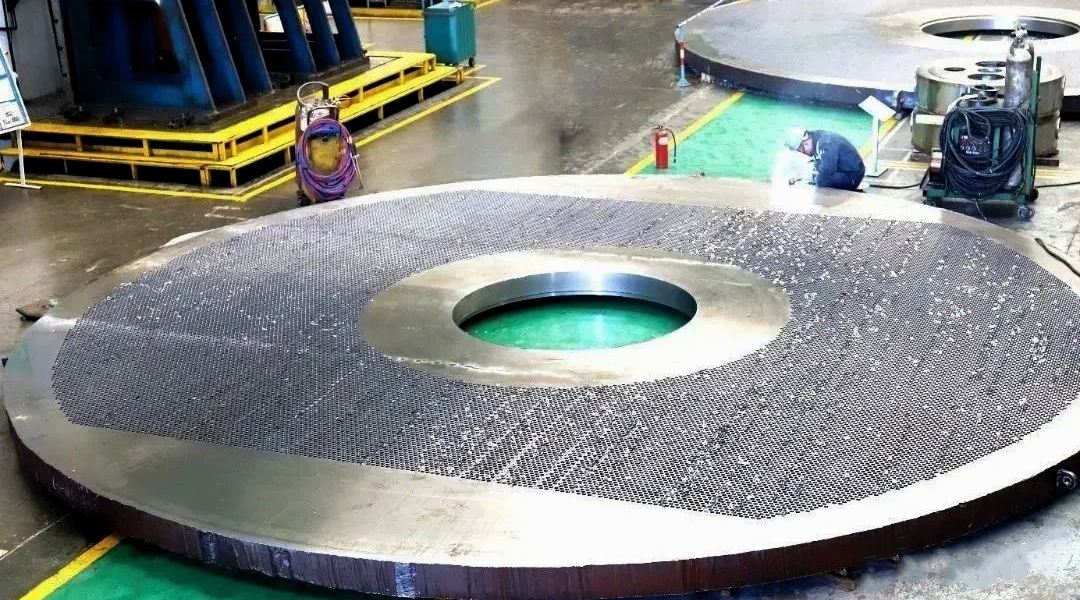
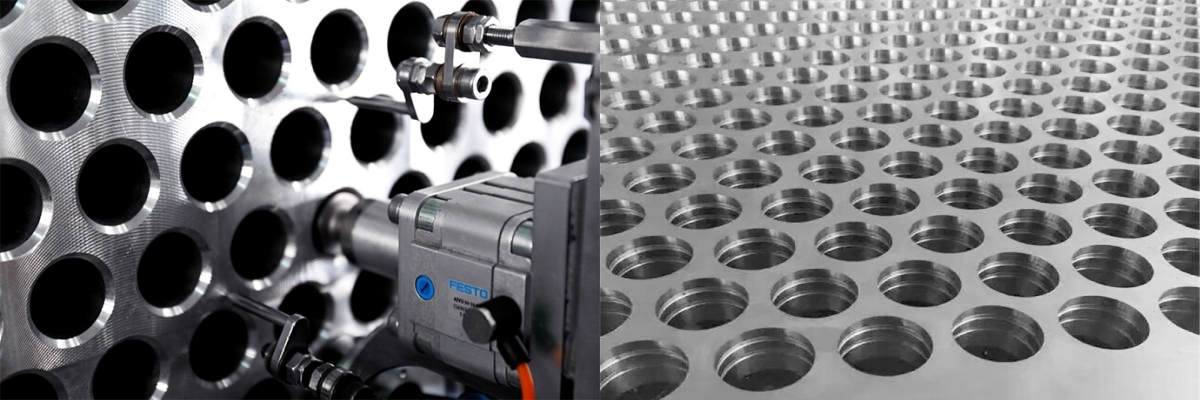
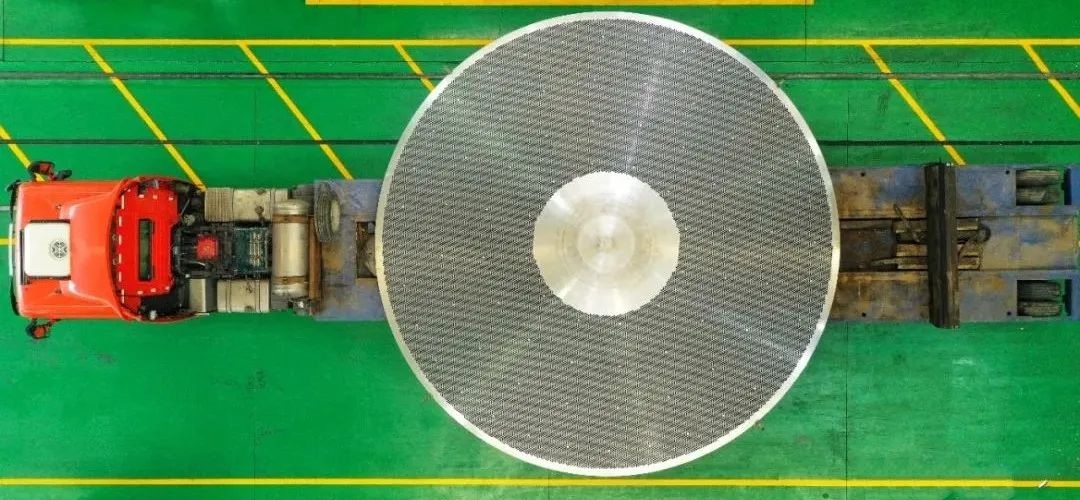
    Stainless steel tube sheets are components used in heat exchangers, condensers, and other applications that require efficient heat transfer. It is a circular plate with precision drilling, used to accommodate tubes in the bundle. The tube sheet is used as a support structure and compression component, and provides a safe attachment for the tubes.


    Chemical Component of Stainless Steel

    The main chemical component of stainless steel is chromium, which reacts with oxygen to form a dense oxide film, which has heat resistance and prevents further corrosion of the metal. This allows stainless steel tube sheets to be used for a long time in various harsh environments. Stainless steel, due to its unique microstructure, has high tensile strength and ductility, ensuring that the tubesheet is not easily deformed or fractured under external forces. Especially in high and low temperature environments, stainless steel can still maintain good mechanical properties and is not easily brittle.


    The advantages of stainless steel tubesheets

    Stainless steel has become the preferred material for tubesheets due to its excellent corrosion resistance. It has rust prevention, oxidation resistance, and anti fouling properties, suitable for high temperature and corrosive environments. Stainless steel tube sheets are commonly used in industries such as petroleum and natural gas, chemical processing, power generation, and HVAC. Stainless steel tube plates have good hygiene performance. Due to its smooth surface and no pores, stainless steel materials are not easy to breed bacteria and microorganisms, and are easy to clean and disinfect, meeting hygiene standards. Therefore, stainless steel tube plates are widely used in medical, food processing and other industries, such as surgical instruments, food equipment, etc. In addition, stainless steel tube sheets have sustainability. Stainless steel materials can be recycled and can be melted again to produce new products, reducing resource waste. Meanwhile, stainless steel materials have a long service life, are not easily damaged, reduce the frequency of maintenance and replacement, and have good economic and environmental benefits.


    How to manufacture Stainless steel tube plates

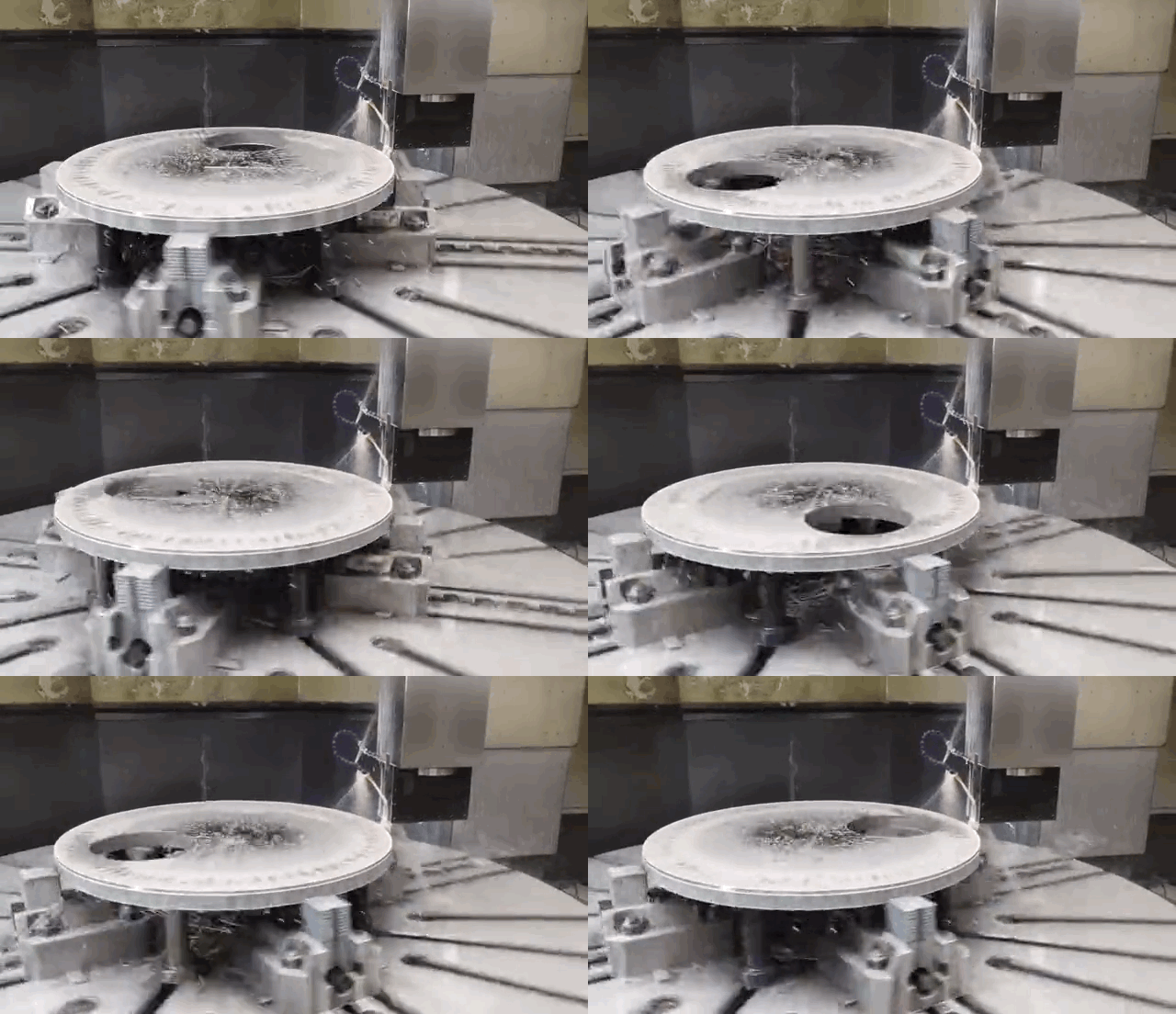
    Stainless steel tube plates are manufactured using various methods, including mechanical processing, drilling, and welding. Precision drilling ensures precise alignment of pipelines, thereby achieving efficient heat transfer. Welding is commonly used to secure pipes to pipe sheets, providing reliable and leak free joints. Wuxi Changrun has absolute equipment strength in tube sheet processing services. At present, the heavy-duty precision workshop has 11 large deep hole drilling equipment and 31 CNC flat drilling equipment, as well as a series of advanced domestic and foreign supporting equipment with high precision, full specifications, and multiple functions. It can provide machining services such as turning, milling, boring, and drilling. There are also advanced equipment such as cutting and welding involved in the previous process.


    The selection of stainless steel for tube plates depends on factors such as operating conditions, temperature, and the corrosiveness of the treated fluid. The common grades of stainless steel used in tube sheets include austenitic stainless steel (such as 304 and 316), duplex stainless steel, and ultra duplex stainless steel. These grades combine corrosion resistance, mechanical strength, and thermal conductivity. In summary, stainless steel tube sheets are key components of heat exchangers and condensers. It provides support for pipelines, promotes effective heat transfer, and provides excellent corrosion resistance under harsh operating conditions. The use of stainless steel tube sheets ensures the lifespan, reliability, and performance of heat transfer equipment in a wide range of industrial applications.


  • Titanium Alloy Tube sheet VS Stainless Steel Tubesheet

    Corrosion resistance:

    Titanium tube sheets have high corrosion resistance, high strength, light weight, and are suitable for aqua regia, chlorine gas, hydrochloric acid, nitric acid, sulfides. They have better corrosion resistance to seawater than stainless steel and are more heat-resistant and cold resistant than stainless steel. Titanium alloy tube sheets have excellent corrosion resistance and biocompatibility, making them suitable for use in more harsh environments. Stainless steel tube sheets have good corrosion fatigue resistance and wear corrosion performance, high strength and fatigue strength, low tendency for hot cracking, higher thermal conductivity compared to austenitic stainless steel, smaller linear expansion coefficient plate, and are suitable for manufacturing tubes for heat exchangers.


    Strength to weight ratio:

    Titanium alloy tube sheets are lighter and more durable than stainless steel tube sheets. Titanium alloy tube sheets have higher strength and lower density, making them commonly used for manufacturing high-strength parts and structures, while also being lighter in weight. Stainless steel tube plates are relatively heavy and have relatively low strength.


    Production cost:

    Titanium alloy tube sheets are more expensive than stainless steel tube sheets. The production and processing costs of titanium alloys are high because their manufacturing requires higher temperatures and more advanced technology, as well as more expensive materials. Therefore, if it is necessary to use in harsh environments and requires high-strength and lightweight materials, titanium alloys may be more suitable. When used in low strength, generally corrosive environments, stainless steel may be a better choice.


    Titanium and stainless steel tube plates are widely used in industries such as petroleum, chemical, natural gas, medical, and food. The choice of tube plate to use needs to be comprehensively considered based on the properties of the medium and cost accounting.


  • Overlay Welding technology and weld overlay tube sheets, flanges, and fittings

    What is overlay welding?

    Overlay welding is a surface treatment process that uses heating sources such as arcs to heat metal or alloy materials, and then heats and melts them on the surface of the base materials to fill the other material and form a layer of metal coating. By depositing materials with certain properties on the surface of the workpiece, the surface characteristics of the workpiece can be changed. The purpose of overlay welding is not to connect the workpiece, but to use welding methods to deposit one or several layers of materials with the desired performance on the workpiece. This process method is widely used in various industrial sectors, mainly for repairing worn and cracked parts, or modifying the surface of workpieces to obtain special properties such as wear resistance, heat resistance, and corrosion resistance of the deposited layer. In order to effectively utilize the function of the overlay layer, it is hoped that the overlay welding method adopted will have smaller base material dilution, higher deposition speed, and excellent overlay performance, namely high-quality, efficient, and low dilution rate overlay welding technology.


    Application of overlay welding technology to Tube Sheet


    The main function of weld overlay tube sheet is to enhance the mechanical properties and wear resistance of the base material. In industries such as chemical plants and power plants, many equipment may experience issues such as wear and corrosion during operation, which seriously affect the stability and lifespan of the equipment. By using the method of overlay welding, the equipment can be reinforced and repaired, greatly extending its service life. weld overlay tube sheets are widely used in petrochemical, coal chemical, refining, oil and gas transportation, marine environment, power, heating and other projects. For more detailed information on welded overlay tube sheet, please click (What is overlay welded tube sheet?)


    Application of overlay welding technology on flanges

    The flange adopts an overlay welding process to combine the two materials, ensuring that the pipeline transportation medium is corrosion-resistant and meets the pressure requirements under working conditions, while greatly reducing material costs. The base material of flanges is generally carbon steel, alloy steel, pipeline steel, etc; The cladding layer is generally made of corrosion-resistant alloys such as stainless steel, duplex steel, nickel based alloys, titanium materials, copper materials, etc. The weld overlay flanges are suitable for connecting two different materials, but they exhibit excellent corrosion and wear resistance. For example, in fields such as chemical, petroleum, natural gas, and pharmaceuticals, if it is necessary to connect materials with good corrosion resistance and the connection part is required to withstand high temperature and high pressure environments, then overlay welding flanges is a very good choice. Weld overlay clad flanges are suitable for situations with high requirements for connection methods. For example, in equipment such as pipelines and vessels that require sealing, overlay welding flanges have been widely used because they can effectively avoid leakage issues at the connection points.


    The advantages of overlay welding flanges

    1. Long lifespan: One of the advantages of welded overlay flanges is their good durability, as they can maintain a long service life in harsh environments.

    2. Corrosion resistance: Due to the use of materials with good corrosion resistance as welding rods for overlay welding flanges, they can effectively resist the corrosion of strong acidic or alkaline substances.

    3. High temperature and high pressure resistance: The welding material of the overlay welding flange can withstand high temperature and high pressure environments, and the connection part will not leak, so it has good applications in extreme temperature or air pressure working environments.


    Application of overlay welding technology on pipes and fittings

    In the modern industrial field, steel pipes and fittings are widely used in industries such as petroleum, chemical, and power. However, due to long-term use and environmental factors, the inner walls of pipelines often suffer from wear and corrosion, posing a threat to their normal operation. To solve this problem, pipeline inner wall overlay welding technology is usually used.


    The benefits of overlay welding on the inner wall of pipes and fittings

    1. Superior wear resistance: High performance wear-resistant materials are used for welding, which can effectively resist the wear and corrosion of the inner wall of the pipeline, and extend the service life of the pipe and fitting.

    2. Strong corrosion resistance: Special alloy materials are used for overlay welding, which has good corrosion resistance and can effectively prevent corrosion and rust on the inner wall of pipes and fittings.

    3. High welding quality: Advanced welding technology is adopted to ensure the bonding strength and density between the overlay layer and the original inner wall of the pipeline, avoiding the risk of leakage caused by welding quality issues.

    4. Easy to operate: The inner wall welding technology of pipes and fittings has the characteristic of easy operation, without the need to disassemble the pipes, only local repairs need to be carried out inside the pipes, greatly saving maintenance time and costs.

    5. Environmental protection and energy conservation: Compared with the traditional method of replacing pipes, pipeline inner wall welding technology has lower energy consumption and smaller environmental impact, which meets the green and environmental protection requirements of modern industrial production.


  • What is condenser Tube Sheet?

    What is condenser?

    The condenser is one of the main heat exchange equipment in refrigeration equipment. The function of the condenser is to cool and condense the high-temperature and high-pressure refrigerant discharged from the compressor into liquid. The heat released by the refrigerant in the condenser is carried away by the cooling medium (water or air).


    What is condenser Tube Sheet?

    The condenser tube sheet is a component of heat exchange in various industries, including power plants, chemical plants, refrigeration systems, and HVAC (Heating Ventilating and Air Conditioning). Its main function is to provide safe connections for the condenser tubes and promote effective heat transfer. Therefore, the working state of the condenser tube sheet directly affects the performance and efficiency of the condenser. Let's explore in more detail the importance and application of condenser tube sheets.


    In power plants

    Firstly, condenser tube sheets are crucial in power plants, where they play a vital role in converting steam into water and facilitating the generation of electricity. The tube sheets offer structural support for the condenser tubes, allowing the transfer of heat from the steam to the cooling medium, typically water. This heat transfer process is essential for converting high-pressure steam into liquid water, which can then be recycled and reused in the power generation cycle.


    In chemical plants

    In chemical plants, condenser tube sheets are used for various purposes, such as cooling and condensing volatile substances, recovering valuable chemicals or solvents, and facilitating heat exchange in chemical processes. The tube sheets provide a stable platform for the condenser tubes, ensuring efficient heat transfer and enabling the separation and collection of desired substances from gas or vapor streams.


    In refrigeration systems

    Condenser tube sheets also find application in refrigeration systems, where they aid in the cooling and condensation of refrigerants. These systems rely on the expansion and compression of refrigerants to transfer heat from the conditioned space to the surrounding environment. The condenser tube sheets help facilitate this heat transfer process by providing a surface for the refrigerant to release heat, enabling its transition from a high-pressure vapor to a low-pressure liquid state.


    In HVAC

    In HVAC (Heating, Ventilation and Air Conditioning) systems, condenser tube sheets are utilized in air-cooled condensers. These systems use the condenser tube sheets to support the tubes through which the refrigerant flows. As the refrigerant releases heat to the ambient air, it condenses into a liquid state before flowing back to the evaporator, enabling the cooling and conditioning of indoor spaces.

    condenser tube sheet


    The material of condenser tube sheets

    To ensure the effective functioning of condenser tube sheets, proper material selection is essential. Factors such as corrosion resistance, strength, and thermal conductivity play a significant role in determining the suitable material for the tube sheet. Stainless steel, carbon steel, copper alloys, and titanium are commonly utilized due to their excellent corrosion resistance and mechanical properties.


    Regular inspection and maintenance of condenser tube sheets are critical to identify any signs of corrosion, erosion, or leaks. Timely repairs or replacements can prevent system failures and ensure prolonged operational efficiency.


    In conclusion, wuxichangrun condenser tube sheets are essential components in various industries, enabling efficient heat transfer, condensation, and cooling processes. Their proper selection, installation, and maintenance are crucial to maintaining optimal system performance, energy efficiency, and reliability.


  • How do I know if my roller shutter motor is dead?

    To determine if your roller shutter motor is dead, you can try the following steps:


    Check the power source: Ensure that the motor is properly connected to a power source and that there is a steady supply of electricity. If the power source is not working, the motor will not be able to operate.


    Test the remote control: If the remote control tubular motor is controlled by a remote control, check the batteries and try using a different remote control to make sure it's not the cause of the problem.


    Check the motor fuse: If the motor fuse has blown, the motor will not be able to receive power and will not operate. Check the manual to determine the location of the fuse and replace it if necessary.


    Check the wiring: Check the wiring that connects the motor to the control system and the power source to ensure that it's properly connected and not damaged.


    Listen for any noise: If the motor is not working, listen for any noise that may indicate that it is receiving power but not functioning properly.


    If the motor still does not work after checking these items, it may be dead and need to be replaced. In some cases, the motor may be repairable, but it's recommended to consult a professional for a proper diagnosis and repair.


    roller shutter motor


  • Technical characteristics of electric roller blind tubular motor

    electric roller blind tubular motor

    The electric roller blind tubular motor is a motor that can drive the roller blind fabric up and down. Its technical characteristics mainly include the following aspects:


    1. Motor structure: The electric roller blind tubular motor adopts a cylindrical structure, and is equipped with components such as a motor, a reducer and a control circuit inside, which can realize precise control and roller blind operation.

    2. Drive mode: The electric roller blind tubular motor is usually powered by DC power supply, which can realize forward and reverse rotation and speed adjustment through the control circuit, and can also support wireless remote control and APP remote control.

    3. Low noise: The electric roller blind tubular motor adopts a precise reducer structure inside, which can effectively reduce noise and make the up and down of the roller blind fabric more stable and quiet.

    4. Low power consumption: The electric roller blind tubular motor adopts high-efficiency motor and control circuit, which can achieve low power consumption, and can also achieve energy saving and environmental protection through functions such as sleep mode.

    5. Safety: The electric roller blind tubular motor adopts a variety of safety protection measures, such as overload protection, temperature protection and prevention of curtain jamming, etc., which can ensure the safety and stability during use.

    In general, the electric roller blind tubular motor has the characteristics of low noise, low power consumption, safety, reliability, and easy control, and is a relatively advanced curtain lifting device.