When selecting an aerosol can, manufacturers often focus on diameter, filling volume, material grade, and pressure requirements. However, one specification deserves just as much attention: tinplate thickness. It directly influences the mechanical strength of the can body, its resistance to deformation, overall packaging weight, and manufacturing cost.
For aerosol packaging manufacturers and product brands, choosing the correct thickness is not simply a matter of using more metal. A thicker can body may provide additional structural rigidity, but the final performance also depends on can diameter, body height, steel properties, forming design, welding quality, and internal pressure.
At SiHaiPack, tinplate aerosol cans are available in different dimensions and material thickness specifications to accommodate various spray applications. Understanding how these factors work together can help buyers make more informed packaging decisions and avoid unnecessary material costs.
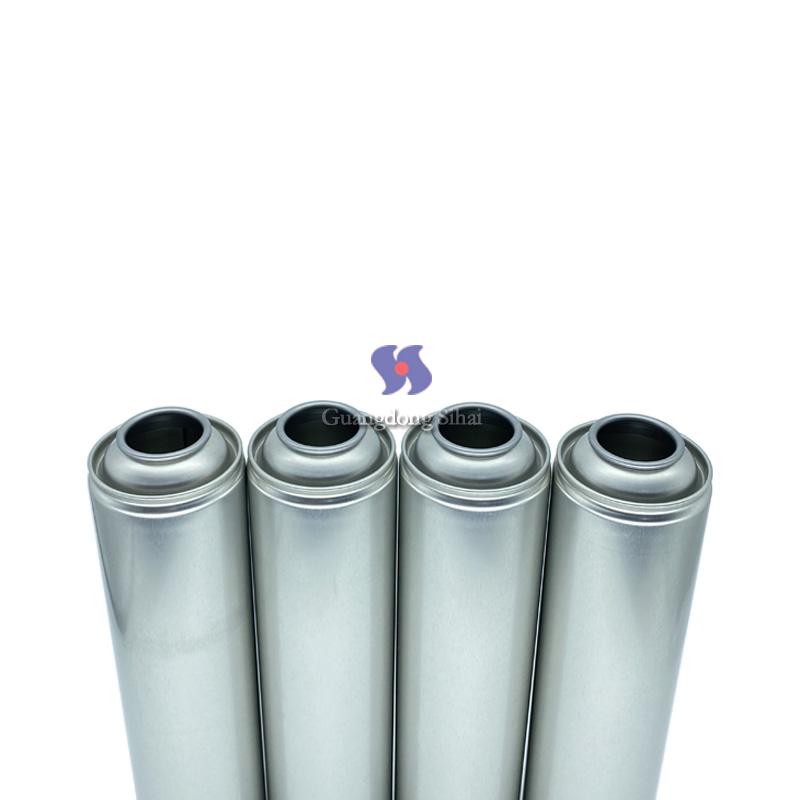
Tinplate aerosol can bodies with necked-in structures
What Is Tinplate Thickness in an Aerosol Can?
Tinplate thickness refers to the thickness of the steel sheet used to manufacture an aerosol can. Tinplate consists of a steel base coated with a thin layer of tin, combining the mechanical properties of steel with the surface protection provided by the tin coating.
In aerosol can production, thickness specifications should be considered separately for the can body, top cone, and bottom dome. These components perform different structural functions and do not necessarily require identical material thicknesses.
For example, SiHaiPack's published product specifications include a 350ml air freshener aerosol can with a 0.20mm body, 0.28mm cone, and 0.28mm dome. This illustrates how different thickness specifications can be used within one complete aerosol container.
| Can Component | Example Thickness | Main Function |
|---|---|---|
| Can Body | 0.20mm | Provides the main cylindrical structure and resists deformation. |
| Top Cone | 0.28mm | Supports the valve mounting area and connects the upper end to the body. |
| Bottom Dome | 0.28mm | Contributes to pressure resistance and container stability. |
These figures are an example from a specific product specification, not universal requirements for all aerosol cans. The appropriate material combination depends on container dimensions, pressure requirements, and structural design.
How Tinplate Thickness Affects Aerosol Can Strength
Thickness has a direct relationship with the mechanical behavior of a steel aerosol can. Increasing the steel sheet thickness generally improves its resistance to deformation, although the actual improvement depends on the complete can structure.
Resistance to Internal Pressure
An aerosol container must withstand the pressure generated by its propellant and product formulation. During storage and transportation, internal pressure places continuous stress on the cylindrical body, seams, shoulder, and bottom.
A thicker steel body generally provides greater resistance to circumferential stress and local deformation when other design factors remain comparable. This can be particularly important for aerosol products with demanding pressure requirements.
However, thickness alone does not determine the safe working pressure. Steel strength, can diameter, forming geometry, weld integrity, and end construction must all be considered. Pressure performance should be verified through appropriate deformation and burst testing rather than estimated from thickness alone.
Resistance to Dents and Mechanical Damage
Aerosol cans may experience impacts, stacking loads, vibration, and handling pressure throughout distribution. A thinner can body may be more susceptible to dents or local buckling if its dimensions and material properties are not properly matched to the application.
Increasing the thickness can improve rigidity and help the can maintain its shape. This is useful for packaging that needs to withstand repeated handling or long-distance transportation.
Structural Stability During Filling and Storage
During aerosol filling, the container is subjected to mechanical operations, pressure changes, and handling forces. Consistent wall thickness helps maintain dimensional stability and supports reliable downstream processing.
For manufacturers, selecting an appropriate thickness is therefore important not only for the finished container but also for production consistency, filling-line compatibility, and packaging reliability.
Does Thicker Tinplate Always Mean Better Pressure Performance?
Not necessarily. Although thicker tinplate generally improves structural rigidity, it does not automatically guarantee a higher pressure rating.
Aerosol can performance is determined by several interconnected factors:
- Steel material strength: The yield strength and mechanical properties of the tinplate influence its ability to withstand stress.
- Can diameter: Larger diameters can increase the circumferential stress experienced by the body under the same internal pressure.
- Can height: Body geometry and unsupported wall area affect resistance to deformation.
- End design: The cone and dome geometry influence how pressure loads are distributed.
- Welding and seaming: Manufacturing quality is essential for maintaining container integrity.
Technical takeaway: A thicker aerosol can body can improve resistance to deformation, but the actual pressure capability must be confirmed through testing of the complete container assembly.
For this reason, aerosol packaging buyers should evaluate the complete container specification instead of comparing suppliers based on a single thickness value.
SiHaiPack Tinplate Aerosol Can Thickness and Pressure Specifications
For practical selection, it is useful to examine the specifications of actual aerosol can products rather than rely on generic thickness recommendations.
SiHaiPack offers aerosol cans in different diameters and heights. Its published product range includes necked-in and straight-wall structures, with tinplate thickness selected according to individual product requirements.
For example, the company's 65mm × 300mm car care aerosol tin can has the following published specifications:
| Product | 65mm × 300mm Car Care Aerosol Can |
| Material | Tinplate |
| Body Thickness | 0.18–0.23mm (customized) |
| Deformation Pressure | 1.2–1.8 MPa |
| Burst Pressure | 1.4–2.0 MPa |
| Can Type | Neck-in |
These figures are product-specific published specifications, not a controlled comparison proving that a particular thickness produces a particular pressure rating. The final performance depends on the complete container design and applicable test method.
Buyers looking for more details can review the 65mm × 300mm car care aerosol tin can and compare its dimensions, material specifications, and pressure requirements with their own project.
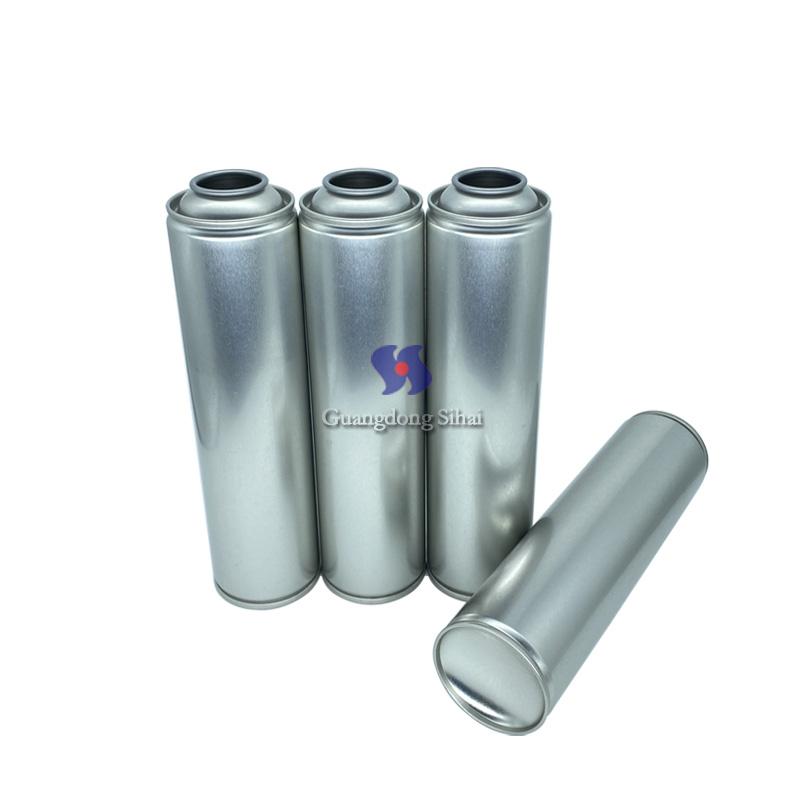
Tinplate aerosol cans with different dimensions and structural configurations
How to Choose the Right Tinplate Thickness for Different Applications
The best thickness depends on the intended product, operating pressure, container dimensions, and transportation conditions. Different aerosol applications may require different combinations of body thickness and end construction.
Personal Care and Cosmetic Aerosols
Hair sprays, deodorants, shaving foams, and similar products generally require containers with consistent dimensions, reliable sealing, and an appropriate pressure rating.
For these applications, buyers should consider the filling pressure, product compatibility, can diameter, and appearance requirements. A suitable tinplate thickness should provide adequate mechanical performance without adding unnecessary weight.
SiHaiPack provides custom aerosol spray tinplate cans in multiple diameters, with different thickness and height options available according to product specifications.
Household Aerosol Products
Air fresheners, insecticides, and household cleaning sprays are commonly packaged in tinplate aerosol containers. Their packaging requirements depend on the formulation, propellant, filling conditions, and intended pressure range.
When choosing thickness, manufacturers should evaluate both mechanical strength and internal coating compatibility. The coating system is particularly important when the formulation may react with exposed metal surfaces.
Automotive and Industrial Aerosols
Car care sprays, lubricants, paint sprays, and industrial aerosol products may involve different formulations and operating conditions. Some products require higher pressure resistance or greater durability during storage and transportation.
In these cases, selecting a can body thickness should be part of a broader engineering assessment that includes steel grade, body geometry, end thickness, and pressure testing.
The Relationship Between Tinplate Thickness and Manufacturing Cost
Material thickness also affects the overall economics of aerosol can production. Using thicker tinplate generally increases the amount of steel required for each container, which can raise raw material consumption and transportation weight.
For high-volume aerosol packaging projects, even a small thickness adjustment can influence total material usage across an entire production order.
However, choosing the thinnest available material is not necessarily the most economical solution. If the container becomes more susceptible to deformation or fails to meet pressure requirements, the resulting product losses, quality issues, and additional testing costs may outweigh the initial material savings.
A more practical approach is to establish the minimum thickness that meets the required mechanical and pressure performance, then validate the complete design through production trials and relevant testing.
What Buyers Should Check Before Ordering Tinplate Aerosol Cans
Before confirming a packaging order, buyers should provide the manufacturer with sufficient technical information to evaluate the appropriate material and construction.
- Product formulation: Identify whether the contents are water-based, solvent-based, acidic, or otherwise chemically active.
- Filling and operating pressure: Confirm the expected working pressure and required deformation and burst test limits.
- Can dimensions: Specify diameter, height, capacity, and whether a necked-in or straight-wall design is required.
- Material thickness: Confirm the body, cone, and dome thickness separately.
- Internal coating: Check compatibility between the lacquer system and the aerosol formulation.
- Quality verification: Request relevant pressure test results, dimensional inspection details, and product samples where appropriate.
Providing these details helps the manufacturer recommend a more suitable aerosol can structure instead of simply quoting a standard thickness.
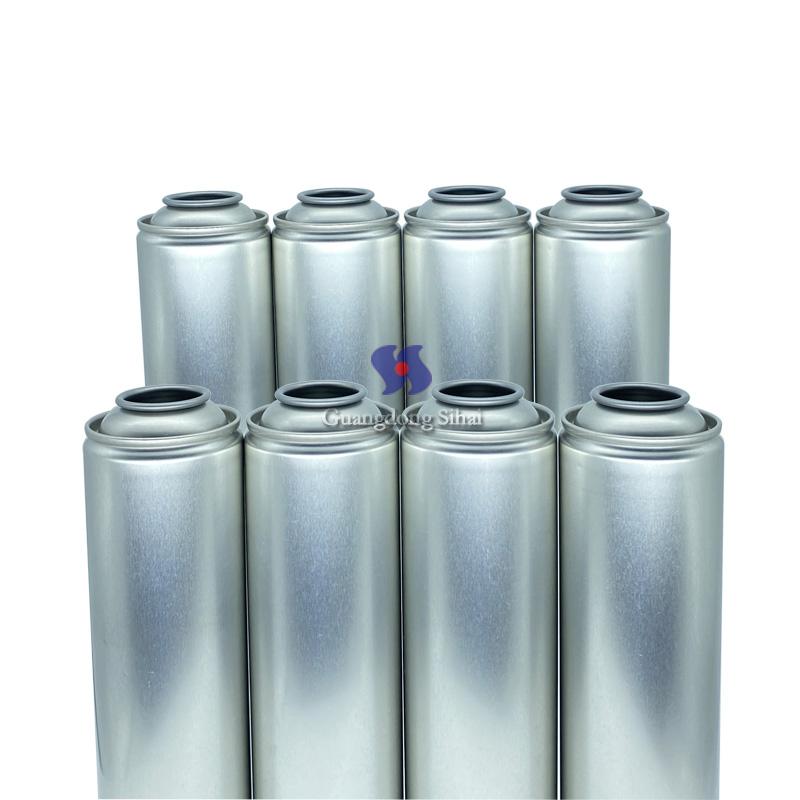
Tinplate aerosol packaging for different spray applications
Why Work with SiHaiPack for Tinplate Aerosol Packaging?
Guangdong Sihai Iron-Printing and Tin-Making Co., Ltd. was established in 1998 and specializes in iron cutting, iron printing, can manufacturing, and aerosol can components.
According to its published company information, SiHaiPack operates an integrated manufacturing facility covering tinplate processing, printing, cone and dome pressing, and aerosol can production.
The company's aerosol packaging range includes different can diameters, necked-in and straight-wall structures, customized printing, and related components such as aerosol cones and domes.
For buyers developing a new aerosol product or reviewing an existing packaging specification, working directly with a manufacturer can make it easier to discuss material selection, structural requirements, printing, and customization.
To discuss your project, visit SiHaiPack's aerosol packaging product range and provide your required can diameter, height, filling pressure, and intended application.
FAQ
Q: What is the standard tinplate thickness for aerosol cans?
A: There is no single universal thickness. Depending on the can design and application, SiHaiPack lists different specifications. For example, one 350ml air freshener aerosol can uses a 0.20mm body, a 0.28mm cone, and a 0.28mm dome.
Q: Does a thicker aerosol can have higher pressure resistance?
A: Generally, increasing steel thickness can improve structural rigidity and resistance to deformation. However, pressure resistance also depends on material strength, diameter, height, end design, welding quality, and testing results.
Q: Why are aerosol can bottoms and tops often thicker than the body?
A: The top cone and bottom dome have different structural functions and forming requirements from the cylindrical body. Their thickness and geometry are selected to support the overall pressure-bearing structure and manufacturing process.
Q: What is the difference between deformation pressure and burst pressure?
A: Deformation pressure refers to the pressure at which a container reaches a specified deformation condition under a test method. Burst pressure refers to the pressure at which the container ruptures. These are different performance indicators and should not be used interchangeably.
Q: Can thinner tinplate reduce aerosol packaging costs?
A: Yes. Reducing material thickness can lower steel consumption and container weight. However, the selected thickness must still satisfy the required pressure, deformation, transportation, and quality standards.
Q: How can I choose the correct tinplate thickness for my aerosol product?
A: Start with the product formulation, working pressure, can diameter, height, and required pressure test limits. Then evaluate the body, cone, and dome thickness together with the manufacturer and verify the final design through testing.