Choosing between aluminum and tinplate aerosol cans is an important decision for manufacturers of spray paints, personal care products, household chemicals, automotive care products, and industrial aerosols. Although both materials are widely used in metal aerosol packaging, they differ in construction, weight, mechanical properties, manufacturing processes, and overall packaging costs.
So, which is better: aluminum or tinplate aerosol cans? The answer depends on the product formulation, filling requirements, pressure specifications, branding objectives, and production budget. Aluminum aerosol cans are generally preferred for lightweight, seamless, and premium packaging, while tinplate aerosol cans offer excellent mechanical rigidity, flexible specifications, and cost-effective production for many high-volume applications.
For businesses sourcing empty aerosol cans, understanding these differences helps reduce packaging costs and improve product compatibility. Guangdong Sihai Iron-Printing and Tin-Making Co., Ltd. provides aerosol packaging solutions, including tinplate aerosol cans and aluminum aerosol cans, for different industrial and consumer markets.
What Are Aluminum and Tinplate Aerosol Cans?
Aluminum aerosol cans are metal containers commonly manufactured through impact extrusion, forming a seamless one-piece body. Without a welded side seam, they provide a smooth external surface, lightweight construction, and flexible options for decorative finishing. They are frequently selected for personal care, cosmetic, and premium consumer packaging.
Tinplate aerosol cans are generally manufactured from thin steel sheets coated with a layer of tin. A typical three-piece aerosol can consists of a cylindrical body, top cone, and bottom dome. The body is welded, while the top and bottom components are attached through seaming processes. This construction provides good mechanical strength and supports a wide range of industrial and household applications.
The main difference is their base material and manufacturing structure. Aluminum cans typically have a seamless body, whereas tinplate cans use a steel-based construction with welded and seamed connections.
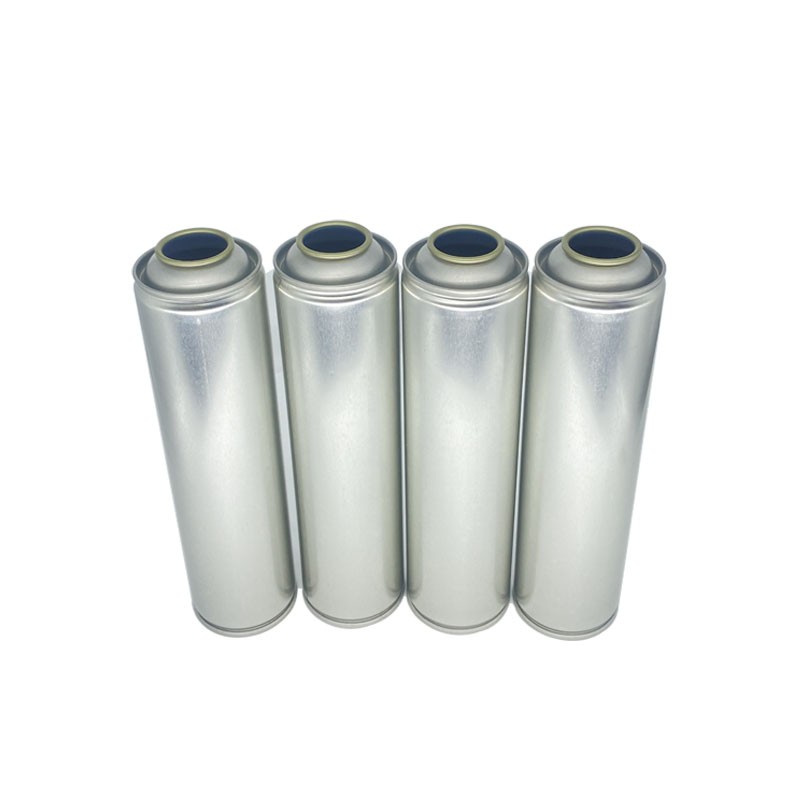
Metal aerosol can packaging manufactured for different product applications.
Aluminum vs Tinplate Aerosol Cans: Key Differences
When comparing aluminum and tinplate aerosol cans, buyers should evaluate more than the appearance of the container. Material weight, structural design, corrosion protection, pressure requirements, and manufacturing costs all influence the final packaging choice.
| Comparison Factor | Aluminum Aerosol Cans | Tinplate Aerosol Cans |
|---|---|---|
| Base Material | Aluminum | Tin-coated steel |
| Construction | Typically seamless, one-piece body | Typically three-piece construction |
| Weight | Generally lighter | Generally heavier |
| Mechanical Properties | Ductile and lightweight | Rigid with good structural strength |
| Corrosion Protection | Depends on alloy and internal coating compatibility | Depends on tin coating and internal lacquer |
| Surface Finish | Smooth, premium appearance | Supports customized printing and coatings |
| Production Cost | Often higher material and processing costs | Often economical for large-volume production |
| Typical Applications | Personal care, cosmetics, premium sprays | Spray paints, insecticides, household and industrial sprays |
These are general material characteristics rather than guaranteed performance specifications. Actual pressure resistance, corrosion protection, and cost depend on can dimensions, material thickness, coating systems, manufacturing processes, and product requirements.
Material Weight and Structural Performance
Weight is one of the most noticeable differences between aluminum and tinplate aerosol packaging. Aluminum has a relatively low density, making it suitable for brands looking to reduce the weight of individual packages and improve transportation efficiency. Its seamless construction also creates a clean and consistent appearance.
Tinplate aerosol cans use a steel substrate, which generally provides greater rigidity. Their three-piece structure is widely used in applications requiring reliable container construction and compatibility with established aerosol filling equipment.
However, a lighter can does not automatically mean better pressure performance. The actual pressure resistance of an aerosol container must be verified through appropriate design calculations and testing, including buckling and burst pressure tests.
For buyers comparing empty aerosol tin cans, it is important to confirm the required diameter, body height, material thickness, valve specifications, and filling pressure before selecting a model.
Corrosion Resistance and Internal Coating Compatibility
Corrosion protection is another important consideration when selecting an aerosol can material. The contents of an aerosol container may include water, solvents, oils, propellants, fragrances, or active chemical ingredients. These substances can interact differently with metal surfaces.
Aluminum naturally develops a thin oxide layer that provides a degree of corrosion resistance. However, this does not eliminate the need for internal coatings. Certain acidic, alkaline, or water-based formulations may require specialized protective linings to prevent product-metal interactions.
Tinplate also requires suitable internal protection. The tin coating protects the steel substrate, while an internal lacquer helps prevent direct contact between the packaged formulation and the metal. Common coating options include epoxy-based and other formulation-compatible protective systems.
Before ordering bulk aerosol packaging, manufacturers should provide the can supplier with the product formulation, pH range, solvent characteristics, and propellant information. Compatibility testing should be completed under actual storage and filling conditions.
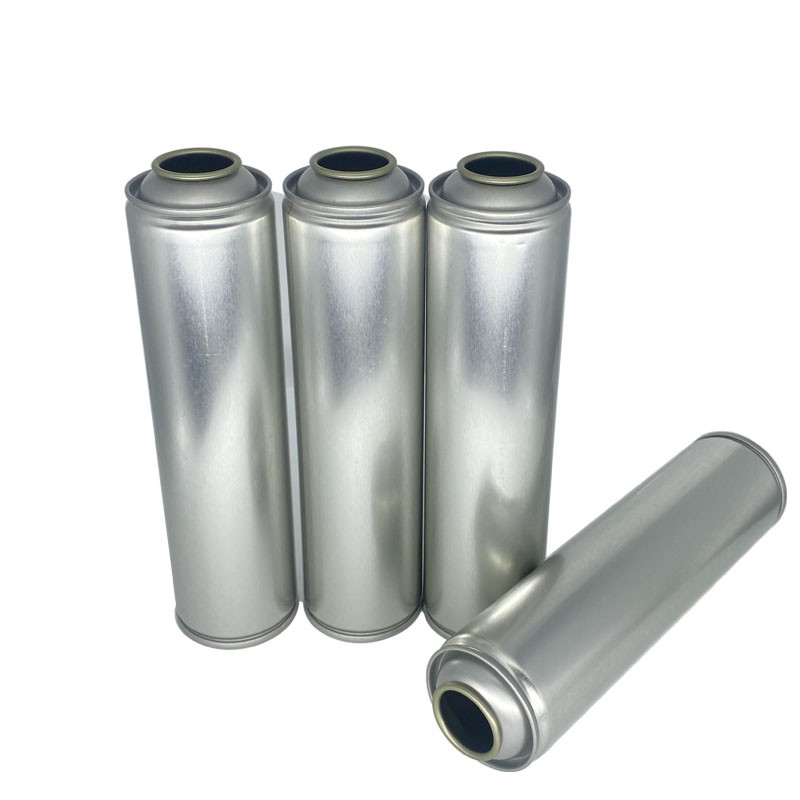
Aerosol can body and formed metal components.
Printing, Appearance and Brand Customization
Packaging appearance plays an important role in product recognition, especially in retail markets. Both aluminum and tinplate aerosol cans can support customized exterior finishes, but their surface characteristics and manufacturing processes differ.
Aluminum cans offer a smooth surface that works well with premium decorative finishes, including multi-color printing, matte coatings, glossy coatings, and metallic effects. This makes them attractive for cosmetic sprays, deodorants, and personal care products.
Tinplate aerosol cans also provide flexible printing options. CMYK and Pantone printing can be used to reproduce brand colors, product information, and promotional graphics. Depending on the design requirements, manufacturers can select different exterior coatings and metallic finishes.
For brands requiring customized metal packaging, Sihai's aerosol packaging range includes different can sizes and configurations for household, personal care, and industrial applications.
Applications of Aluminum Aerosol Cans
Aluminum aerosol cans are commonly selected for products where lightweight construction, seamless appearance, and premium presentation are important.
- Personal care products: Deodorants, body sprays, hair sprays, and shaving foams.
- Cosmetic products: Facial sprays, skincare mists, and beauty products.
- Air fresheners: Premium fragrance and household scent products.
- Specialty aerosol products: Selected formulations requiring lightweight metal packaging.
The final aluminum can specification should be determined by the formulation, required capacity, propellant, valve system, and applicable pressure standards. Buyers can explore Sihai aluminum aerosol cans to review available product options and sizes.
Applications of Tinplate Aerosol Cans
Tinplate aerosol cans are widely used in applications that require a durable steel-based container, flexible dimensions, and economical manufacturing for large production quantities.
- Spray paint: Automotive paint, industrial coatings, and DIY spray paint products.
- Insecticides: Household insect sprays and pest control products.
- Automotive care: Lubricants, cleaning sprays, and maintenance products.
- Household products: Air fresheners, cleaning sprays, and other daily-use aerosols.
- Industrial applications: Technical sprays and selected chemical aerosol products.
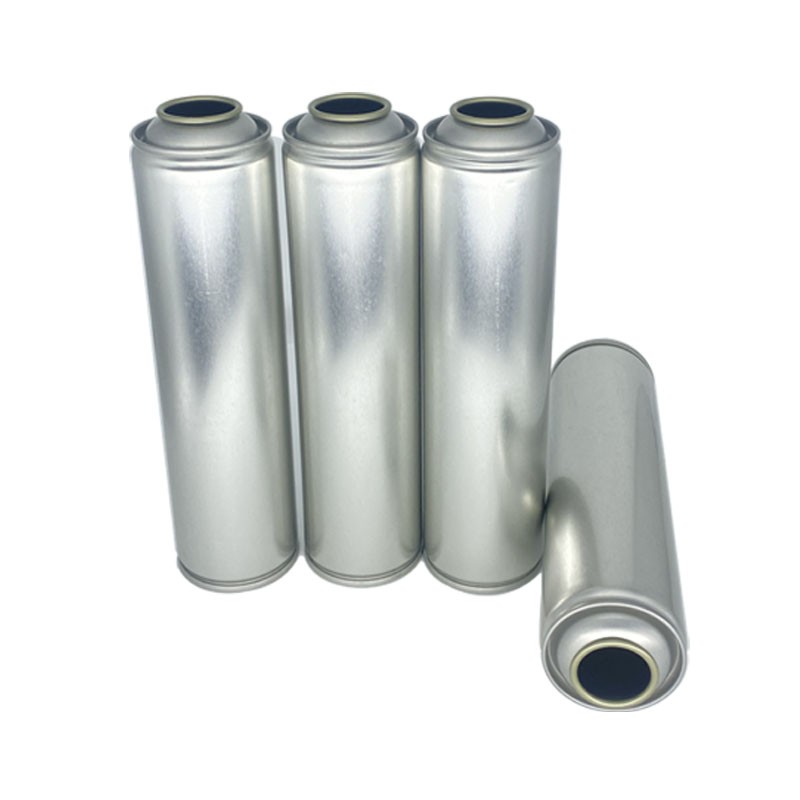
Empty metal aerosol cans for different filling requirements.
For example, Sihai offers tinplate aerosol can options with diameters of 45mm, 52mm, 57mm, 60mm, 65mm, and 70mm. Different heights and can structures can be selected according to product capacity and filling requirements.
A 65mm aerosol tin can may be suitable for certain paint spray and industrial packaging projects, while smaller diameters can be considered for personal care and household products. The correct specification should always be confirmed against the filling line and pressure requirements.
Buyers can also review Sihai's tinplate aerosol can product details for available dimensions, material thickness, printing options, and manufacturing information.
How to Choose Between Aluminum and Tinplate Aerosol Cans
The right aerosol can material depends on the specific requirements of your product and production process. Before requesting a quotation, consider the following factors.
Product formulation: Check whether the contents are water-based, solvent-based, acidic, alkaline, or chemically active. Confirm internal coating compatibility through testing.
Filling pressure: Provide the working pressure, propellant type, and required safety margins. The can design must meet the applicable pressure and transport regulations.
Can dimensions and capacity: Confirm diameter, height, nominal filling volume, total capacity, and available filling-line space.
Brand positioning: Consider whether the product needs a premium seamless appearance or customized tinplate printing for retail and industrial markets.
Production volume and budget: Compare material costs, tooling requirements, minimum order quantities, printing costs, and transportation expenses.
Quality and compliance: Ask for material specifications, coating information, pressure test reports, and relevant manufacturing certifications.
In general, aluminum aerosol cans are a strong option for lightweight and premium packaging, while tinplate aerosol cans are suitable for many cost-conscious, industrial, and high-volume projects. Neither material is universally better. The most appropriate choice is the one that meets the formulation, pressure, filling, and commercial requirements of the finished product.
Why Work with Sihai for Custom Aerosol Can Manufacturing?
Guangdong Sihai Iron-Printing and Tin-Making Co., Ltd. has been involved in the metal packaging industry since 1998. Based in Guangzhou, China, the company specializes in aerosol can manufacturing, tinplate printing, and related packaging components.
Sihai provides a range of aerosol packaging options, including three-piece tinplate aerosol cans, aluminum aerosol cans, aerosol cones and domes, and related accessories. Its tinplate aerosol can range covers multiple diameters and can configurations to accommodate different filling and packaging requirements.
The company also integrates tinplate cutting, printing, and can-making processes, helping customers coordinate product specifications, customized printing, and production requirements with one manufacturing partner.
Whether you are sourcing empty aerosol tin cans for spray paint, insecticide, automotive care, or household products, or looking for aluminum aerosol packaging for consumer brands, selecting a manufacturer with relevant production experience is an important part of maintaining consistent packaging quality.
If you are planning a new aerosol packaging project, contact Sihai with your product type, required can diameter, height, filling volume, and estimated order quantity to discuss a suitable packaging solution.
Frequently Asked Questions About Aluminum and Tinplate Aerosol Cans
Q: What is the main difference between aluminum and tinplate aerosol cans?
A: Aluminum aerosol cans typically feature a seamless one-piece body and lighter weight. Tinplate aerosol cans generally use a three-piece steel-based construction, offering good rigidity and flexible manufacturing specifications.
Q: Are aluminum aerosol cans better than tinplate aerosol cans?
A: Not in every application. Aluminum is suitable for lightweight and premium packaging, while tinplate is often preferred for cost-effective, durable packaging in industrial and household markets. The choice depends on formulation compatibility, pressure requirements, and budget.
Q: Are tinplate aerosol cans suitable for spray paint?
A: Yes. Tinplate aerosol cans are widely used for spray paint packaging. The internal lacquer, material thickness, valve compatibility, and pressure resistance must be selected according to the paint formulation and propellant.
Q: Do aluminum aerosol cans need an internal coating?
A: Many aluminum aerosol cans require an internal protective coating to ensure compatibility with the packaged formulation. The coating should be selected according to the chemical properties of the contents.
Q: What sizes of tinplate aerosol cans does Sihai offer?
A: Sihai's listed tinplate aerosol can range includes diameters of 45mm, 52mm, 57mm, 60mm, 65mm, and 70mm. Available heights depend on the can diameter and construction type.
Q: What information should buyers provide when requesting a custom aerosol can quotation?
A: Buyers should provide the product application, material preference, can diameter, height, filling volume, propellant, working pressure, internal coating requirements, printing design, and estimated order quantity.
Q: Can Sihai provide customized aerosol can printing?
A: Yes. Sihai provides tinplate printing options, including CMYK and Pantone colors, as well as different exterior finishes. Printing requirements and artwork should be confirmed before production.